Sunday, May 15, 2011

Invasion of the Caterpillars

I've been on the watch for the white butterflies (moths?) that appear every summer to lay single white eggs on the underside (usually) of Brassica food plants (broccoli, cabbage, Brussels sprouts, etc.). Wikipedia calls them "Small White" butterflies -- though this picture isn't as bright white as the females I see here in North Carolina: (both the following pics from Wikimedia Commons)

800px-Pieris.rapae.mounted

This is the caterpillar that hatches from the egg -- up to an inch long. They can shred a plant:

Pieris.rapae.caterpillar

Since I've been seeing the butterflies circling around my Brussels sprouts (and found the single white egg left where I saw one perched on the underside of a leaf), I've been watching for the caterpillars. This was the first one I found two days later:


So I immediately fired up the BioMister and soaked the six plants with BT (bacillus thuringiensis), an organic bacterium that the worms ingest from eating the plants. The bacterium shuts down their appetite (basically) and they expire in a couple days. BT is harmless to humans, animal life, and the environment.

Wednesday, May 11, 2011

Reading and Writing

Leo Strauss, Persecution and the Art of Writing:

It is a general observation that people write as they read. As a
rule, careful writers are careful readers and vice versa. A careful
writer wants to be read carefully. He cannot know what it means to
be read carefully but by having done careful reading himself.
Reading precedes writing. We read before we write. We learn to
write by reading. A man learns to write well by reading well good
books, by reading most carefully books which are most carefully
written. (Quoted from Edwin Curley,
Behind the Geometrical Method:
A Reading of Spinoza's Ethics, Princeton University Press, 1988,
p. ii.)

"We learn to write by reading." This is why reading good books is
essential to becoming a good writer.

Copied and posted from MaverickPhilosopher.com, a blog recommended by my son, Daniel.

Wednesday, May 4, 2011

Prepare to Be Moved

A few weeks ago I posted a video of a group of singers around the world performing Sophie Madeleine's song, "You Are My Favorite." It was cool -- but not as cool as what's below. Don't let the length of the videos dissuade you; this is well worth the time invested. If you haven't seen the "Sophie" video you might want to watch it first in order to appreciate the enormous scale you'll see in the second video below.

I realize this music may not appeal to everyone. Rather, I'm posting these videos as further examples of the never-ending expansion of creativity of which human beings are capable -- here related to the arts (music and visual) and technology. The TED conferences serve as amazing symposia in which talented, creative, and inquisitive people can sharpen and stimulate one another by sharing, affirmation, and enjoyment.

First, watch this for background (14+ minutes):


Then this (9+") (go to 720p and full screen if you can):

Sunday, May 1, 2011

Longing to Be Ruled

Yes, I rose at 5:00 a.m. last Friday to watch the Duke and Duchess of Cambridge marry in Westminster Abbey. I admit to being a sucker for pageantry and nobody does it better than the British. Why did an estimated two billion people worldwide, including 23 million Americans, tune in to watch the ceremony and pageantry? It's an interesting question. In America, we call ourselves proud to have jettisoned the baggage of royalty in the 18th century, yet we are still fascinated by the "royals." For me, it may be the English genes my maternal grandfather passed down to me, but I think there's another reason why I -- and people in general -- are attracted to "kings and queens." It goes beyond the fairy tale bit, I think. Yes, they are beautiful (at least these two) and rich and live in castles and palaces. But I think there's something else happening besides envy.

I think human beings have a longing to be ruled. After all, the Bible says we were created as subjects of God -- a royal relationship that mankind threw off by choice. And perhaps we give our emotions to earthly kings in a misdirected attempt to find our created place as subjects of a true king. Again, in America we set aside royalty because the examples of the day -- the British kings -- were not good models. And yet, in establishing our tripartite government we reflected the three dimensions of God's kingly rule:

For the Lord is our judge (judicial branch),
the Lord is our lawgiver (legislative branch),
the Lord is our king (executive branch);
it is he who will save us.
(Isaiah 33:22)

Deep down, we know we need saving. And we know that is a king's business. So even though America is a republic and not a monarchy, we still long for a leader to save us. I remember the emotion I felt when watching the funeral of Ronald Reagan -- maybe the closest thing we've had to a "good king" in the modern American era (in spite of his imperfections).

So when Prince William and Princess Catherine open the balcony doors on the second floor of Buckingham Palace and appeared to the hundreds of thousands who stood below, looking up endearingly at them, cheering at the tops of their lungs, it was like a fresh opportunity for the British people, and many more around the world, to feel something that is likely undefinable to most: the longing to look up to someone who is bigger and better than we are.

Of course, that is an unreasonable expectation to project onto a couple of twenty-somethings who stand on the same clay feet as do the rest of us. Though they will likely sit on the thrones of England one day, their ceremonial-only positions will have little impact on the world. But when we see royalty taking their rightful place, it ought to remind us that we were created to be loyal subjects. The real question is, Subjects of whom? Certainly not of any earthly king. Palaces, royal colors and guards, and earthly wealth cannot fill the heart of commoners like us. They can only remind us that a true king is coming -- Jesus, the King of kings -- in whom our longings for submission will finally be realized; by whom we will ultimately be saved as we bow in submission to Him.

For now, royal reminders like the wedding of William and Catherine have their place -- earthly shadows of an eternal reality.

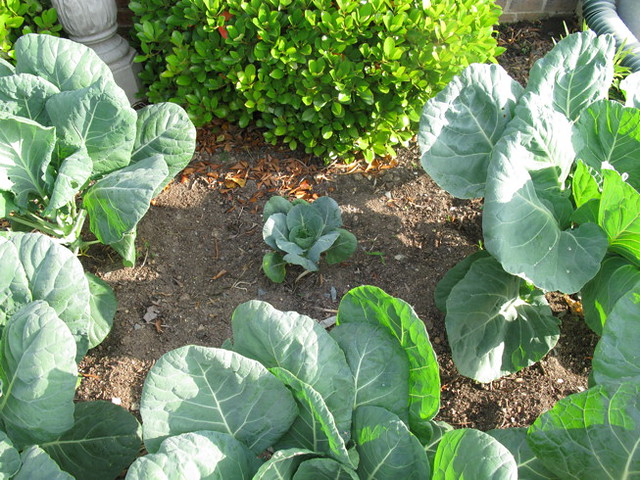
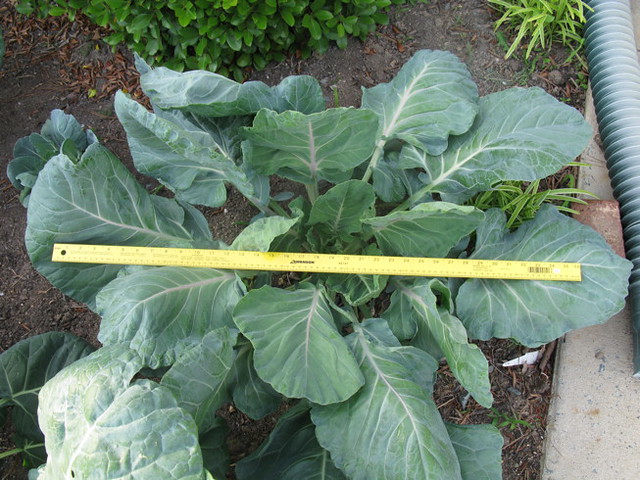
Brussels Sprouts

I planted six Brussels sprouts plants and five of the six have done beautifully. Isn't that interesting that one of the six has hardly budged?

IMG_3129

These plants have grown remarkably. I hope they produce fruit in keeping with their foliage size:

IMG_3128

IMG_3142

I put a tray of wheatgrass in the dirt and it has begun to produce heads of berries:

IMG_3126

These are two Swiss chard plants that were planted last summer. They survived through the winter but this spring promptly bolted and are going to seed. The one is nearly six feet tall. I decided to let them go to see what the flower/seed production looks like:

IMG_3140

Spring Water

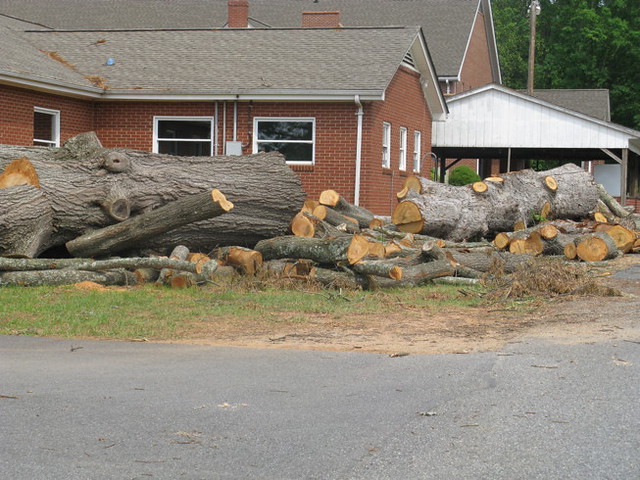
Went to Cold Spring outside Concord, NC, after church to fetch spring water. Was sad to see two gigantic trees that stood in back of the church now in pieces. I don't know if recent storms brought them down -- I didn't see evidence of them being uprooted or "broken." Looks like they were both just cut down. Would love to have the wood -- would love to have a wood-burning fireplace.

IMG_3131

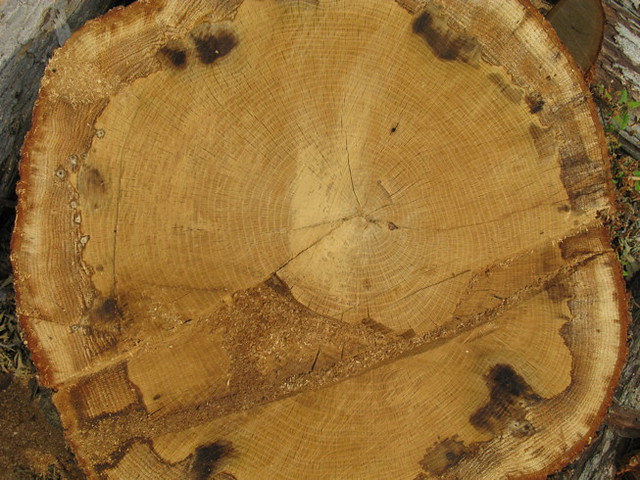
Lots of years represented by these rings:

IMG_3136

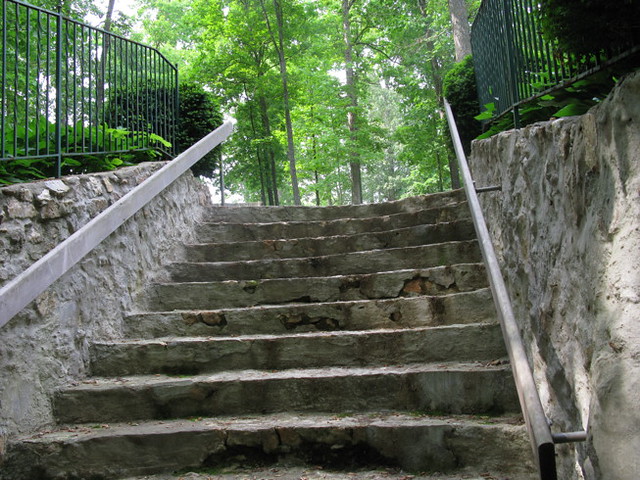
I love the coolness and quiet of the little grotto where the spring is located. This is standing by the spring looking up:

IMG_3133

Filling five-gallon bottles:


Water weighs eight pounds per gallon, so each five-gallon jug weighs 40 pounds, or two equals 80 pounds. Good resistance training for the bones. No wonder our ancestors rarely had osteoporosis:


What a treasure this spring is -- it's been running steady since the early 1800's (the earliest records) and I assume long before then.

Saturday, April 30, 2011

Thought For the Day 3.0

“All that is thought should not be said, all that is said should not be written, all that is written should not be published, all that is published should not be read.”

- Rabbi Menachem Mendel Morgenstern of Tomashov (The Kotzker Rebbe)

See also 1 Corinthians 10:23: "'Everything is permissible'—but not everything is beneficial. 'Everything is permissible'—but not everything is constructive."

Diigolet

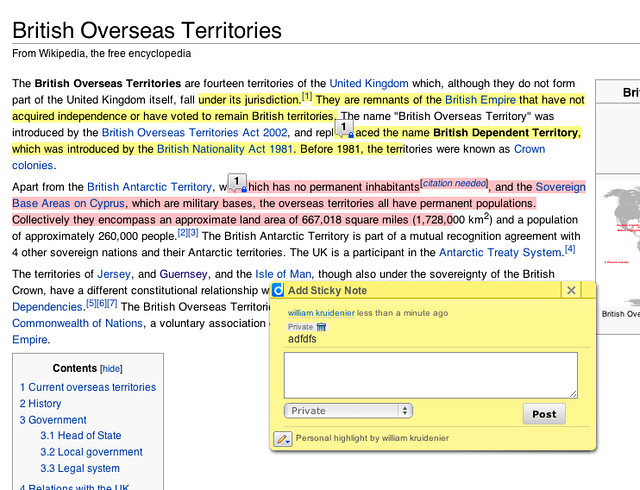
Because I do so much reading on the Internet, I have long wished there was a way to highlight paragraphs in long pieces on a web page -- like using a highlighter pen when reading a book or article in hard copy -- so I could come back and find them again . My wish was granted with Diigolet -- a simple browser extension that works beautifully. It does more than I need (like bookmarking, sticky notes added to the web page, etc.), but what I do need -- highlighting -- it does beautifully. It even holds the highlighting/sticky notes if you navigate away from the page, then return to the highlighted page. I think it even holds the highlighting if you quit the browser, then return to a highlighted page later and click on the Diggolet button in the browser tool bar. (Can't risk that at the moment -- I'll try it later!) For anyone who is tempted to pick up a felt-tip highlighter and draw pink or yellow lines across your computer screen, install Diigolet instead.

Here's a quick screen shot of highlighting in two colors and a sticky note:

Screen shot 2011-04-30 at 7.08.34 PM

    Westminster Abbey

    A few huge, beautiful pics of the interior of Westminster Abbey on the day of the royal wedding. What a gorgeous setting.

    Friday, April 29, 2011

    Thought for the Day 2.0

    Someone once asked Somerset Maugham if he wrote on a schedule or only when struck by inspiration. "I write only when inspiration strikes," he replied. "Fortunately it strikes ever morning at nine o'clock sharp."
    Steven Pressfield, The War of Art: Winning the Inner Creative Battle

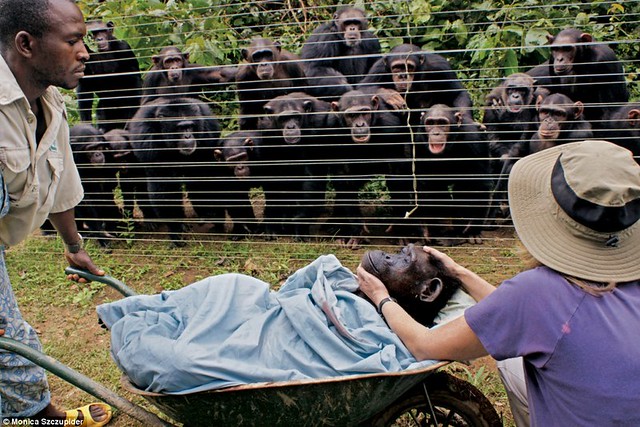
    Grief

    0Ws36

    Read the story here.

    Thursday, April 28, 2011

    Thought for the Day 1.0

    If tomorrow morning by some stroke of magic every dazed and benighted soul woke up with the power to take the first step toward pursuing his or her dreams, every shrink in the directory would be out of business. Prisons would stand empty. The alcohol and tobacco industries would collapse, along with the junk food, cosmetic surgery, and infotainment businesses, not to mention pharmaceutical companies, hospitals, and the medical profession from top to bottom. Domestic abuse would become extinct. as would addiction, obesity, migraine headaches, road rage, and dandruff.
    —Steven Pressfield, The War of Art: Winning the Inner Creative Battle

    BikeShare—Hopefully Coming to Every City

    The largest metro BikeShare program is in Paris, but a similar program has been implemented successfully in Washington, D.C. Read the full article here.


      Sunday, April 24, 2011

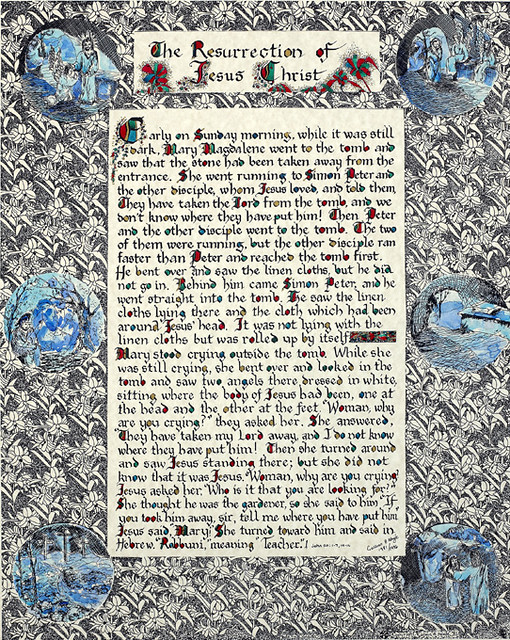
      He Is Risen!

      Resurrection_Of_Jesus_Christ

      Saturday, April 23, 2011

      How Great

      Undoubtedly the highlight of the Academy of Country Music "Girls' Night Out" concert: Vince Gill and Carrie Underwood. Matching what may be the purest voice in country music with a guitar virtuoso and singer like Vince Gill is quite a combination.

      (My old computer wouldn't have been able to keep up, but if you have one that can . . . choose 1080p in the resolution selector in the lower right, and full screen for a knock-out version of this song.)


      And purely in the interest of passionate performing, I'm adding this duet by Ronnie Dunn and Jennifer Nettles—I don't think there are two singers anywhere that make you believe they are singing something that's painfully true more than these two. Until I checked, I didn't realize this song was written by the amazing Patty Griffin -- on her A Kiss in Time album.

      Friday, April 22, 2011

      Scary

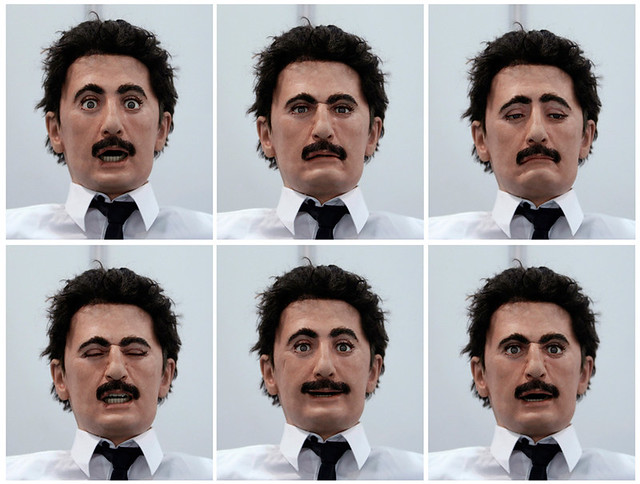
      Does this guy remind you of somebody you know? Not likely. He's (it's) a robot created at National Taiwan University. I wonder if, one day, it will be hard to tell the living from the non-living.

      TAIWAN/

      Uh, I Have to Be Going Now

      Thursday, April 21, 2011

      Hmmm—Vine Ripe Tomatoes

      I snagged this picture from an Atlantic article on migrant workers unions in Florida, etc. (Lost the link to the article and couldn't find it searching Atlantic's site.) I'm only posting it because it's a great illustration of modern commercial agriculture: picking tomatoes when they're green and rock hard, then gassing them, etc., to bring them to maturity when it's time to sell them. If you look on some of the leaves, you can see white residue from some sort of spray. Toxic? Non-toxic? I don't know. But the whole picture is very unappealing. Compare that picture with a bright red organic tomato at a farmer's market picked red off the vine the day before. Or better yet, one pulled five minutes before you slice it, picked from a tomato plant in your own yard.

      How Is This Different from a Laptop?

      I'm on record as saying that the laptop's days are numbered; that the "pad" computer will replace the ubiquitous lapper. (Not soon, obviously, but eventually.)

      And maybe not as soon as anybody thinks given this iPad ad. It's for a device that does three things: provides a keyboard for the iPad; holds the iPad upright for typing; provides a protective cover for the iPad. Hey -- how is that different from a laptop?!

      Okay -- I get how the iPad is different. I just found it amusing that folks are buying iPads and also devices that turn their iPads back into the laptop they used to use.

      Meaning Through Music

      Paul Simon's new album, So Beautiful or So What? received a 5-of-5 stars review from Christianity Today. In fact, there are so many references to God and spirituality in the songs that, in a video about the album, Simon says Paul McCartney came backstage after hearing the songs at a concert and asked Simon, "Aren't you Jewish?" There have always been a lot of references to God in Simon's songs, as well as Sting's. In neither case do I know what that means to them personally.

      Moby has always been identified as a "Christian" of some sort, and this song ("The Day") from his new album (Destroyed) supports that contention—about the victory of good over evil.

      The music video:


      Moby explaining more about the making and meaning of the song:

      Friday, April 15, 2011

      The 12 Worst Cars on the Road

      Forbes.com has a survey of the "12 worst cars on the road" drawn from a number of performance-reliability studies. Might'ave known -- the car I've been thinking about the last couple years -- the Jeep Wrangler Unlimited (pictured) -- is on the list. Oh well -- good reason not to spend money.

      Thursday, April 14, 2011

      Beauty and the Beast

      Pros call the Paris-Roubaix six-hour bike race "The Hell of the North" because of its bone-rattling, filling-loosening ride over cobblestones. This gorgeous video was shot on a 4,000-frames-per-second camera allowing for high-def slow-motion that is starkly beautiful. If there's a way to find beauty in the belly of a beast, this is it: (read the full account of the video here)

      Tuesday, April 12, 2011

      Beautiful Signs of Spring

      Gorgeous photos of spring unfolding all over the world. 

      Friday, April 8, 2011

      Saying the Same, Only Better


      (Thanks to Robert in Atlanta for this link.)

      Wednesday, April 6, 2011

      Back Porch Groove Music

      I don't know of these artists -- Raphael Saadiq (and here) and his ax-man, Rob "Fonksta" Bacon -- but I've rarely heard two guys produce this kind of groove with just two guitars. And it's mainly Rob Bacon -- the amount of music he produces from his Taylor guitar is astounding -- and so effortless. Shot at NPR headquarters, I take it -- cool setting for a concert. Gotta love the Blues Brothers look -- black suits, sunglasses. I also love that he had to ask the [I'm guessing mostly-white] NPR staff-audience to clap along. Just sayin' . . . :-) But thanks to NPR for making this available! (I would not have been able to watch this at 480p, full-screen on my old computer. But now that I can -- wow -- like watching a concert on DVD. NPR shot this beautifully.)

      Monday, April 4, 2011

      My Favorite Video

      This is one of the coolest music videos I've seen: singer-songwriter-ukulelist (yay, ukes) Sophie Madeleine starts to sing one of her amazing songs and is "joined" by fans doing their own version of her song. Very cool -- and great song! Every time I watch this I see new things. People are so funny!

      A Little Embarrassing

      This is a great exercise in Middle East geo-politics. An interactive exercise in identifying the countries most in the news of late. There were quite a few (all the "-stans") I couldn't place.

      Tuesday, March 29, 2011

      Is This a Good Idea?

      A new iPhone (and soon Android) app will soon allow hundreds of your "closest friends" (whether you know them or not) to see any photos and videos you take with your phone.

      The app is called Color and works like this: As soon as you open the app, you'll start receiving on your phone photos and videos of other Color users within 150 feet of where you are -- in a crowded bar, for instance, where you're looking to meet people. You can annotate a comment to someone's photo and use it as an intro to a conversation, etc.

      The app was created by a smart tech guy with a couple other very successful startups under his belt (one purchased by Apple, the music service LaLa), and he's received big-time venture capital support as if this is going to be the next new social networking phenom.

      Of course, you don't have to turn Color on -- then no one can see your pics/videos and you can't see those of other Color uses. But how many people are going to resist? The same number who resist looking at train wrecks, is my guess.

      Sunday, March 27, 2011

      Poor Old Dirt Farmer

      Fans of The Band will recognize Levon Helm's name; others, his voice if not his name. He was the drummer for the group and sang the lead vocals on many of their best-known songs: "The Weight," "Up on Cripple Creek," and "The Night They Drove Old Dixie Down." His voice has changed now due to age and a near-fatal bout with throat cancer. In 2007 he released a Grammy-winning solo album, Dirt Farmer, and the video below is from the title track. This video -- the life and the people and the musicians -- are what keeps the dream of rural living alive in my heart. Here's hoping Levon Helm keeps livin', drummin', and singin'.

      Mac Mechanics

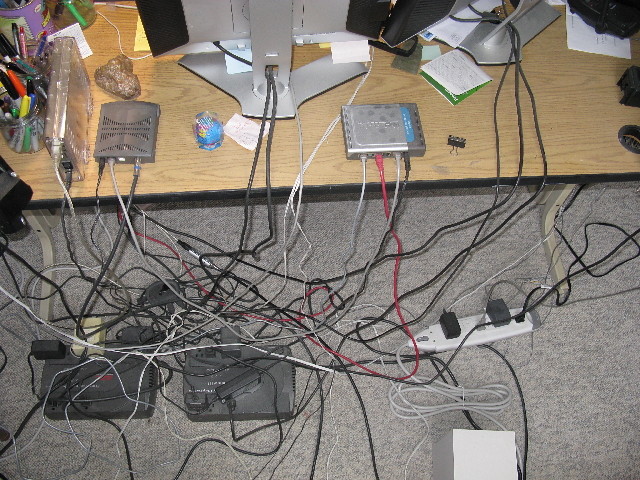
      Our lives have become so entangled with computers -- in more ways than one:

      IMG_3047

      My current Mac -- a G5 PowerPC tower -- has been pulling steadily for me since 2003 but has been showing its age the last year or two. Primarily, its chipset (PowerPC) won't run the latest version of the Mac OS (Snow Leopard), and its 1.8 ghz processor and eight-year-old graphics card (driving two 21" monitors) often labor to process the increasingly large (HD) streaming video off the web. So I decided it was time to upgrade. (Hey, it's a business deduction.)

      After no small amount of research I opted for the latest Mac Mini. It's just the "computer" -- no monitor, keyboard, mouse, etc. -- which is all I need. It comes with a 2.66 ghz processor, a way faster graphics card, two gigs of RAM, and a 500 gig drive (5,400 rpm -- why doesn't Apple offer a 7,200 rpm drive?). To upgrade the Mini, I ordered eight gigs of RAM (4 gig chips x 2) and a faster (7,200 rpm) 500 gig drive to replace the drive that comes in the Mini. (I ordered these parts from Other World Computing from whom I've bought Mac stuff over the years -- highly recommended -- except for -- see below.)

      Swapping out RAM (taking out the two one-gig chips and replacing them with the two 4-gig chips) is easy enough. But changing out the hard drive is probably above my pay grade. Fortunately, OWC has excellent step-by-step videos on their web site for how to do everything. The video for swapping out my hard drive said the job was "four out of four" on the difficulty scale -- rated "Challenging." But the video is really clear, so I decided to tackle it myself. (The video said "30 minutes," but I spent two hours. Story of my life.)

      Macs seem to be as beautifully designed on the inside as on the outside. Amazing that just a few weeks ago the deft hands of several Chinese assemblymen/women put this little marvel together. (Wired magazine recently did an article on the massive Foxconn factory in China where Apple, and other, products are assembled. It's like a small city, complete with workers taking their own lives -- 17 of the one million workers last year. If folks spend all their waking hours doing what I did for two hours, one can see how the frustration could mount.)

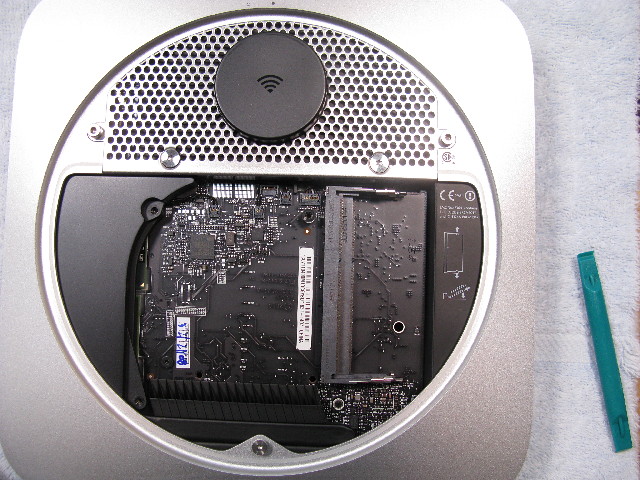
      With the bottom cover of the Mini removed. The hard drive sits under the grill in the top of the photo; the round black circle is the Wi-Fi antenna; I had already removed the two RAM chips from the rectangular slots on the right side. Not a centimeter of wasted space:

      IMG_3075

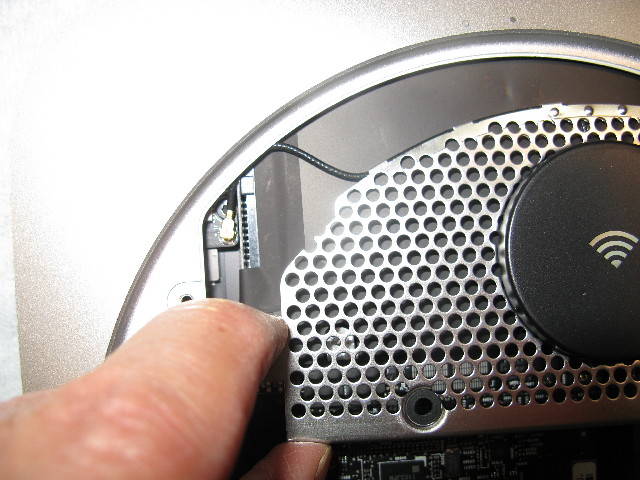
      I would take pics along the way to make sure I remembered how things fit -- in this case, the antenna wire going underneath the cowling when reconnected and reinstalled:

      IMG_3076

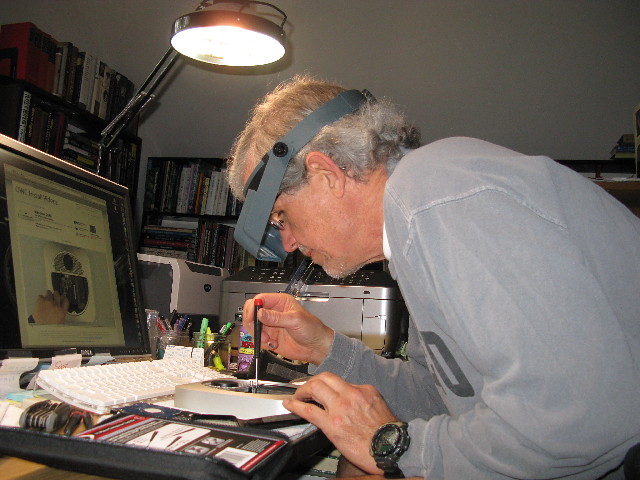
      After doing this for a while, I grabbed my box set of McGuffey's Readers to set the Mini on. The magnifiers I'm wearing have a focal length of about six inches, so you have to be right down on the subject. Raising the Mini up off the desk provided needed relief:

      IMG_3074

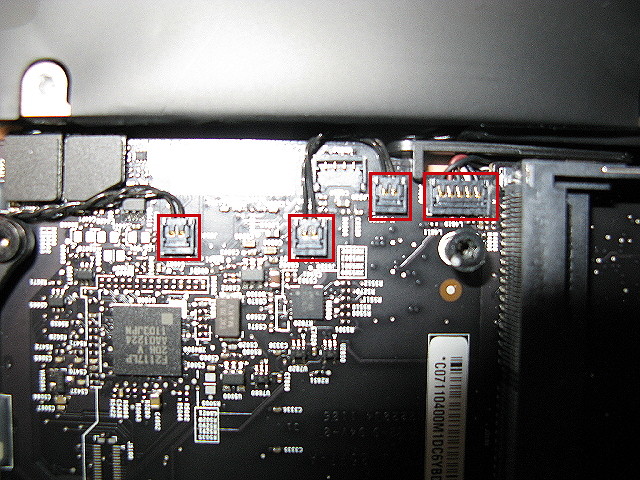
      This is why I took pictures -- so I'd know where to reconnect these and other plugs:

      IMG_3077

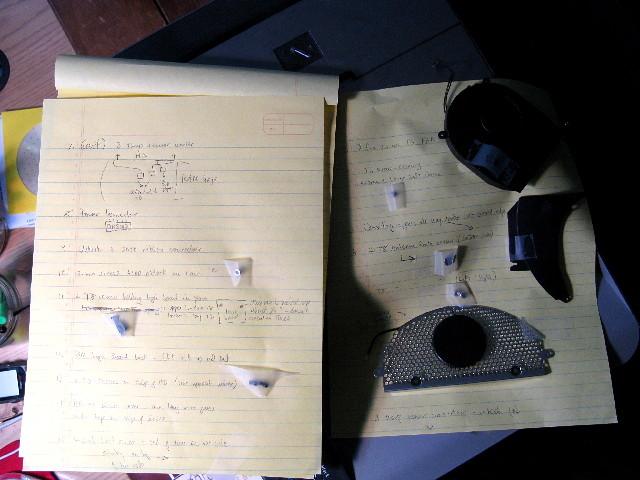
      I also wrote down the steps as they appeared on the video and taped the pieces and parts -- and the TINY screws -- next to each step -- then worked backward to reassemble everything (the video, of course, goes through reassembly as well):

      IMG_3083

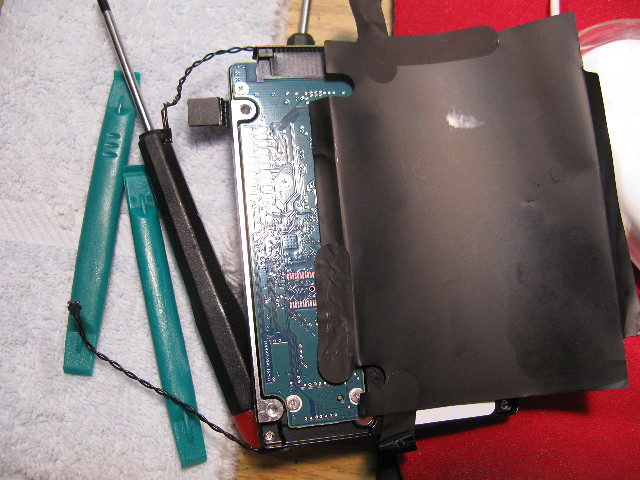
      The hard drive itself after being removed -- I remember when 20 megabyte drives looked like a brick. Now you get 500 gigabyte drives the size of an old 3.5" floppy:

      IMG_3081

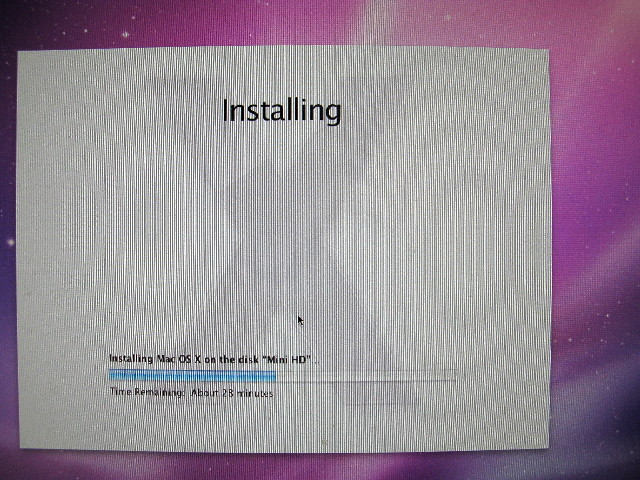
      With the new drive and new RAM installed, and no leftover parts, it was time to format the new drive and install the Mac OS. Then, connect to the router and download lots of software updates from Apple -- without a hitch. Amazing:

      IMG_3084

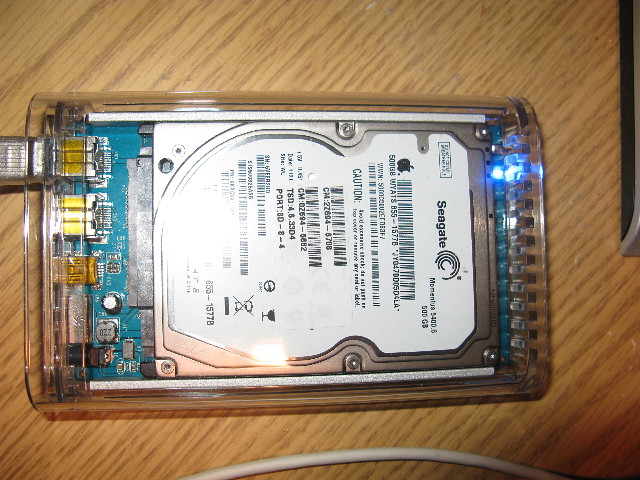
      When I bought the faster hard drive from OWC, that meant I would have the original hard drive left over. So I bought a drive enclosure from them and turned the original Mini hard drive into a 500-gig external drive to use for backups, etc. Very nice -- draws power from the USB connection so it powers on and off with the computer. Is completely portable -- toss it in a briefcase and go:

      IMG_3088

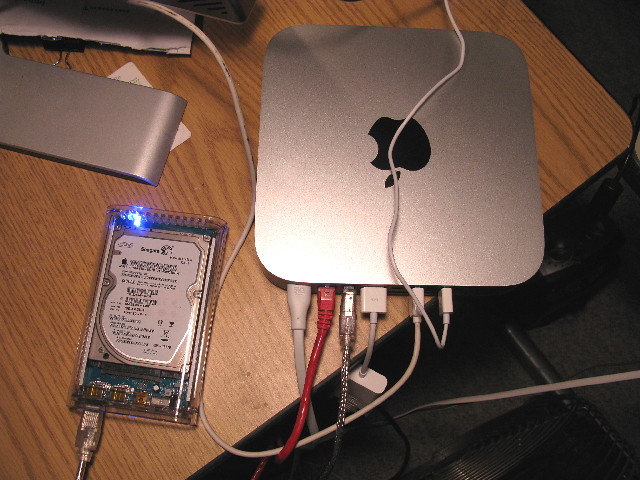
      The Mini and new external HD are now connected to one of my two monitors, with its own keyboard and mouse. The next challenge will be move all my existing files and apps from the old Mac to the Mini, done my connecting the two Macs with a Firewire 800 cable and using Apple's Migration Assistant utility program -- with fingers crossed:

      IMG_3087

      Everything went slowly, but smoothly. My only complaint was the toolkit I bought from OWC with Torx screw drivers (five-pointed male and female instead of slots or Phillips), tweezers (invaluable, though the guy on the video didn't need them!), and nylon pry tools. The tips of the Torx drivers are too soft -- one didn't fit at all, another's points wore down quickly. I had a great set of mini-drivers, for fixing computers, etc., that I had bought from ifixit.com, a number of months ago, and that set contained all the right sizes of Torx drivers I needed -- hard tips, magnetized -- great tools. (ifixit.com is an amazing how-to site for fixing tech stuff.)

      I have no idea where I would have had this work done. I figured if I was going to void the Apple warranty by replacing factory parts, I might as well void it myself instead of paying somebody else to do it. So far, so good.

      And the new Mini, compared to the old G5, is WAY fast -- especially streaming off the web. Things will slow down after I move everything onto the new drive from the old computer. But right now, it's a poppin' machine.

      Thursday, March 24, 2011

      "Diligent Efficiency"

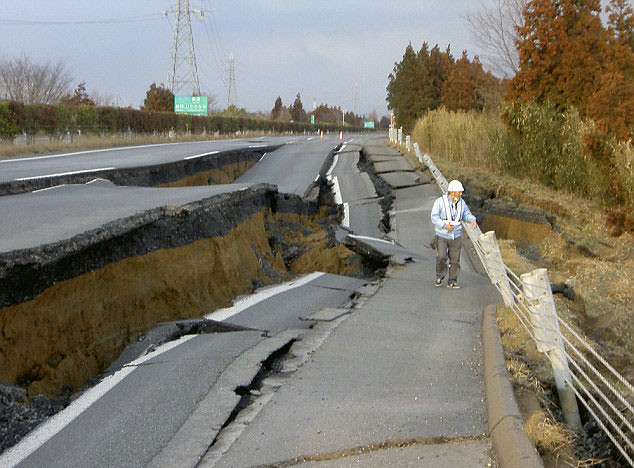
      The NBC Nightly News tonight had a brief report on a stretch of highway in Japan severely damaged in the earthquake:

      ap_highway_before

      The news said it was repaired in three days -- other news sources I read online said six days:

      ap_highway_after

      Note the power line tower and green sign in the before and after photos for verification. This is the same stretch of road. Whether it was three days or six days -- or 16 days -- can you believe the "diligent efficiency" that restored this road in such a short time? And can you imagine how long it might have taken in the U.S. to accomplish the same thing? Brian Williams on the NBC news show told New York City residents to take notice regarding the potholes that have been in their streets for ages: "It doesn't have to be that way."

      Full disclosure: This stretch of highway in Japan is managed by a private company. Perhaps that's the reason it was repaired so quickly. If so, it's another argument for governments outsourcing these kinds of jobs to private enterprise. Governments have no incentive to hurry since they are paying themselves. Private companies, on the other hand, move quickly since they are there to make money. Why don't we do this?

      On the other hand, I'm impressed with the efficiency and care displayed by the U.S. military folks who are doing so much to distribute relief supplies to Japanese villages cut off by the quake. On the same newscast there was a report on a military helicopter taking supplies to a village that had received very little support since the earthquake. In spite of their need and the freezing cold, the Japanese residents, instead of mobbing the helicopter like we see in so many other relief situations, formed an orderly line -- a "bucket brigade" -- to unload the supplies from the helicopter. Then a handshake and a bow from one of the Japanese men to the military officer as the chopper prepared to leave.

      There's been much in the news about the lack of looting and the quiet dignity with which the Japanese have gone about responding to such a terrible tragedy. Such reports leave me impressed.

      Tuesday, March 22, 2011

      Creative Creatures

      Monday, March 21, 2011

      Quinoa Quandry

      Great New York Times article on the surge in popularity of quinoa (keen-wah). Demand is helping raise living standards for Andean farmers in South America but it has put the lowly grain out of the reach of people for whom it has been a staple for centuries.

      Saturday, March 19, 2011

      Possible ≠ Necessary

      In this short video interview, novelist Jonathan Safron Foer, author of Eating Animals, talks about food choices while walking through a market in Israel. He is one of the few people I've ever heard raise the argument that just because something is likable or possible, that doesn't mean we should do it. That is, just because meat tastes good is not a reason to kill animals to get it. This is an argument food writer Michael Pollan needs to hear -- he says he eats meat because he likes it.

      This argument for self-limiting was voiced in a different context 1,900+ years ago by the apostle Paul: "Everything is permissible—but not everything is beneficial. Everything is permissible—but not everything is constructive" (1 Corinthians 10:23).

      Ten Years from Now

      I recently read Guitar Lessons: A Life's Journey Turning Passion into Business by Bob Taylor, co-founder of (now) world-famous Taylor Guitars. It's a book of reminisces -- lessons on life and business learned in the process of pursuing a passion. From the age of 17, when he built his first guitar in high school shop class, to being the head of the fastest-growing guitar brand in the world, Taylor learned a lot and recounts most of it in the book.

      I thought the next-to-last chapter was the best: "In 10 Years, We'll Be Glad We Did." He cites numerous examples in the history of Taylor Guitars when they struggled mightily to learn or implement something new; when common sense would have said, "This is too hard." Like when they started a new factory in Mexico -- navigating the maze of a different culture's language, legal requirements, work styles, etc., was a nightmare. His stock answer to such difficult situations was, "In ten years, we'll be glad we did." In other words, everything is hard. But if we can get through the start-up phase, it will pay off in the long-run.

      He cites an example of when he failed to follow through with that belief: When he and his wife moved into their third (California) home, his wife wanted to plant an avocado tree. Taylor put it off because they take four to five years to bear fruit and he didn't think they'd be there that long. But they ended up staying in that home for 20 years. So they missed out on 15 years of avocados. If he had just planted the tree(s) when they moved in, "In ten years I'd have been glad I did." (my paraphrase)

      Taylor likes to say, "It might take ten years, but time goes by whether you do something or not, so why not start?" Ouch -- I can think of many things I wish I had started 10 years ago. Time goes by regardless. It doesn't wait while we procrastinate or "do more research."

      The concluding paragraph of the chapter:
      Taking that chance, getting started and seeing new plans and projects through is the ony way you will get to the point where you can look back and say you're glad you did. I blew it on the avocado tree. I passed up my opportunity to start. But with Taylor Guitars I jumped in and started the projects that would change our future and I'm glad I did.
      Having celebrated my 63rd birthday this week, the book has caused me to think, "When I'm 73, what will I look back to 2011 and wish I had started when I had the chance?"

      There are tons of YouTube videos involving Taylor Guitars, of course, but there's a nice promo video for the book at Amazon here.

      Friday, March 18, 2011

      Virtual Colonoscopy

      Wanna' see a squeaky-clean colon? I'll treat you to a look at mine -- at least a digitally re-created version of it, anyway.

      In 2005 I decided to have a colonoscopy and investigated "virtual colonoscopy" (v.c.), a technology I had read about. At that time, there was one company that was the leader in the field. and there were hospitals/clinics across the country that had installed their technology for doing v.c.'s. There was one in Greensboro, NC, so I made an appointment and had the procedure done.

      Here's the difference between a traditional, invasive colonoscopy and a non-invasive v.c. (both procedures require thorough emptying and cleansing of the colon before the procedure):

      Traditional: insert a "snake" with a camera attached into the rectum and thread it through the colon while the doc watches the images returned by the camera on a screen -- looking primarily for pre-cancerous polyps or other abnormalities. If polyps are found, the snake can produce a wire lasso that clips the polyp off the colon wall. Sedation is required meaning a traditional colonoscopy is a tag-team event: you and someone to drive you home.

      Virtual colonoscopy: inflate the colon with carbon dioxide gas via the rectum. Lying on a table, you pass through an imaging machine (either CAT or MRI) where 3-D "slices" of the colon are captured and saved to a computer. The computer software then creates a 3-D image of the interior of the entire colon which the doctor can then "fly" through and look at every nook and cranny of the colon wall. The carbon dioxide gas dissipates from the body and you're done. The downside of the v.c. is this: if polyps are discovered, you still have to have a traditional colonoscopy done with the snake, etc., so they can go in and clip the polyps off. Remember that the v.c. is non-invasive, so it can't clip polyps off since it's not actually inside the colon. Knowing that, I took a chance on my colon being in pretty good shape and not having any polyps which turned out to be true.

      I didn't choose v.c. for fear of the invasive nature of the traditional method. I just like technology and cutting edge stuff so opted for the v.c. Everything I read about it, and was told pre-op by the clinicians, was that it was virtually "painless" -- just a slight expansion of the diaphragm area as the colon inflates.

      That was the understatement of the decade. It turned out to be one of the most uncomfortable experiences of my life -- VERY painful -- and here's what I think happened: I think the technician pumped in WAY more gas to inflate the colon than was needed. I thought I was going to explode. I could hardly even turn myself over on the table to make the second pass through the imager. As much as I don't like to express pain, I was moaning and groaning like a medieval heretic on a rack in the basement of an inquisitor's castle. I spent 20 post-op minutes on the floor of a bathroom waiting to deflate, after which I felt fine.

      Time for my next objective: Get the doc to show me my home movie. He was a young internist with sterling credentials and more than happy to show off his high-tech toys. The software had crunched the images together into a movie by the time I was dressed, so we sat down in front of his monitors and watched the fly-through. He commented on what great distention (expansion) I had (that was my first clue that the technician had over-inflated my colon), and said it all looked great -- no polyps or any other problems.

      Because the movies were in standard .avi format I asked him if he would burn them to a disc for me that I could keep: "No problem."

      There were two different movies on the disc -- the one below is the shorter of the two showing the lower end of the colon (cecum) near where it connects with the small intestine. The other longer movie wouldn't play when I got it home. Apparently there was a glitch when he burned it to the disc. Lucky for you -- you only have to see part of my colon.

      Pretty cool, huh? (Remember: these are digitally drawn images, not pictures. There are movies on YouTube of colon interiors taken with the camera used in the traditional method. Needless to say, those movies are a bit, er, messier looking than these.)


      Half the People vs. Half the Meals

      EdibleManhattan.com has a helpful interview with novelist Jonathan Safran Foer, most recently the author of Eating Animals. Foer is a smart guy—he makes some good points in the interview like distinguishing between half the world becoming vegetarian (not likely) versus half the world's meals being vegetarian (very doable). Good point that I hadn't considered.

      Wednesday, March 16, 2011

      Animal Rules

      The New York Times food "Opinionator" Mark Bittman has a great column about inconsistency when it comes to animal welfare. A pet pig is protected by welfare laws whereas a pig in an industrial food factory is not. Basically, factory food farmers are allowed to define "common use" when it comes to how to treat animals they own. Jonathan Safran Foer said to Bittman that giving the factory food industry the right to define cruelty is like "giving burglars the power to define trespassing." Bittman is not a vegan, but he is sensible and smart when it comes to observing "the system." (And a follow-up column here.)

      Monday, March 14, 2011

      Tinker Toys in Space

      USA Today has a great animated piece on the evolution of the International Space Station since 1998. It reminds me of building with Tinker Toys or Legos -- and it's much larger than I was aware of. Pretty amazing.