Tuesday, February 16, 2010

Acid or Alkaline?

Hallelujah Acres has posted a good overview article on the impact of the body's pH (degree of acidity or alkalinity) on health. pH is determined by what we eat. The Standard American Diet (meat, dairy, refined grains, sugar, coffee, beer, chocolate) is an acidic diet; a plant-based diet is slightly alkaline which is what the body prefers (and needs, to maintain health). Read it here.

Monday, February 15, 2010

Live Long and Laugh Loud in Boulder

Boulder, Colorado, was named the happiest, healthiest city in the U.S. Bottom of the list of 162 cities? Huntingdon, West Virginia—not surprisingly, the city chosen by TED Prize-winning chef Jamie Oliver as the American city most in need of his efforts to improve nutritional standards.

Sunday, February 14, 2010

It's Not the Words of Our Enemies . . .

Heard an NPR interview today with the trail-and-trial-seasoned Holmes Brothers—three African American musicians who apparently have a strong following for their blend of gospel, blues, and R&B. I wasn't familiar with them, but see a half-dozen or so albums to their credit on Amazon. They have a new album coming out in March—Feed My Soul—one song of which is titled "Fair Weather Friend," about friends who aren't there when we need them.

The NPR commentator shared this thought about the message of the song: "It's not the words of our enemies but the silence of our friends." Strong, I thought.

She said it as though it's a well-known piece of wisdom, but I had never heard it before. Is anyone familiar with this saying?

Jurassic Park Redux

All modern, domesticated cattle are descended from the mighty auroch, an extinct prehistoric "cow" that stood six feet at the shoulder—the last of which died in 1627 in a wildlife reserve in Poland.

Scientists are in the process of trying to back-breed the auroch into existence, using scraps of DNA from preserved bones, comparing it with the DNA of modern cattle, etc, until they create a genetic match. Amazing. Read about this process with the auroch and other extinct species here. I guess Jurassic Park was just a few years ahead of its time. (Picture borrowed from Wikipedia.)

Letter to Pres. Bill Clinton

In light of former president Bill Clinton's second invasive heart procedure this past week, Dr. John McDougall has written him a second letter warning him of the dangers of the protocols he is following and inviting him to begin saving his life via nutritional therapy (a la Ornish, Pritikin, McDougall, or Esselstyn). You have to love McDougall—he is not afraid to tell it like it is. And when lives are at stake, who can blame him? Read his letter here.

And I just saw these comments about Clinton's stent procedure by his doctor, Dr. Allen Schwartz: "This was not a result of either his lifestyle or his diet, which have been excellent . . . . This is a chronic condition; we don't have a cure." [How encouraging!] Dr. Clyde Yancy, president of the American Heart Association, said, "It's important to remember that blocked blood vessels are not an event but a disease . . . ."

Gee, I wonder why so many documented cases of heart "disease" have been alleviated or reversed by patients who switched to a plant-based diet? (The evidence from doctors who have documented these results is available for anyone to see—including Dr. Schwartz.)

Friday, February 12, 2010

BiblicalVegan.com

A good indicator of the level of interest or activity surrounding any given endeavor is the availability of Internet domain names pertaining to the interest. Out of curiosity, I checked "biblicalvegan.com" and—surprise, surprise!—it was available. What does that tell 'ya? So I registered it and now own it. Not sure what I'll do with it down the road. At the very least, it will keep the (relatively) few others who share the Bible+vegan connection from being discouraged if/when they check to see if that domain name is available. Yes, they'll be sorry it's not available, but gratified to know that there's at least one other person out there who shares their beliefs.

The Wrong Starting Point

The young British chef, Jamie Oliver, was awarded the TED Prize this year, $100,000, to use in implementing his wish: "I wish for your help to create a strong, sustainable movement to educate every child about food, inspire families to cook again and empower people everywhere to fight obesity."

It's a noble goal and he gave an emotional talk. But it had too much of the liberal, feel-good, the-government-and-schools-should-be-doing-more approach to suit me. Take the short video of him in an American grammar school classroom where the students (second graders?) couldn't identify the most common vegetables he showed them. Whose fault is that? The school's?

And I thought about my own young granddaughters who, I believe, could have identified most, if not all, of the veggies. Why? Because they learned it at home from parents who have involved them in growing food in their own backyard garden. The liberal solution for everything is for public, tax-payer funded entities to solve the most basic of life's problems—in this case, learning about healthful relationships with food. Where are the parents in this equation who are responsible for teaching children what's right and responsible? Yes, schools should do their part by serving healthy food, as should government by not subsidizing unhealthy approaches to food like our government does. But teaching about fundamental issues of life—like food—ought to begin in the home.

See what you think:

Thursday, February 11, 2010

Drink Up, Dave!


David's latest purchase in pursuit of good health: a gallon of Bragg's organic unfiltered apple cider vinegar. I have an entire book dedicated to the folklore healing properties of ACV—and many folks swear by it today. If you visit earthclinic.com, almost every home remedy suggested involves doing something with ACV. (Ahem, the true initiates know it as ACV). It'll cure what ails 'ya.

Drain it, Dave!

From Dust to Dust, Quickly

I don't know how long this USAToday.com link ("Going Green Eternally") will remain active, so if you're interested, check it out soon. It's a photo slide-show of a "green" burial at a "natural" (woodland) cemetery in South Carolina. Burial is in a cardboard casket; no concrete vault; a respectful gathering of family and friends. I've been watching this trend the last several years and agree 100 percent with it. Having buried two parents, the cost of modern funerals is . . . well, there's no need for it to be as complicated or expensive as it is. The last time I checked, in North Carolina it's legal to bury someone without embalming, etc., if burial is within 24 hours of death. It's now possible to purchase simple caskets—or have wooden ones made—from outlets other than funeral homes at a fraction of the cost of the bronze behemoths sold to grieving families by funeral homes. A good book on the subject is Grave Matters—A Journey Through the Modern Funeral Industry to a Natural Way of Burial by Mark Harris (Scribner, 2007).

This pictorial gives a good overview of the process. The casket is driven to the woodland site in a family van, loaded into a small wagon pulled behind a golf cart, driven to a pretty chapel in the woods, then carried to the grave. Simple and respectful—just as it should be. (Except—the lady in the pictorial isn't playing a flute. Even my granddaughters know it's a recorder. Right, girls?)

2-15-10 update: When my daughter-in-law read this post and viewed the slide show she realized this was funeral and burial of a good friend of hers, a young mom whose children are in a homeschooling play group with my granddaughters in South Carolina.

What Are Animals For?

I'm constantly on the lookout for insights leading to understanding of the purpose of animals in God's design of planet earth—something besides eating them, which is not why they were created (Genesis 1:29-30).

A January 25, 2010, Time magazine article (time.com—don't know if it was in the print version) is helpful in this regard. It profiles the new plans of organic gardening guru Eliot Coleman and his wife, Barbara Damrosch (gardening columnist for the Washington Post), to integrate a small herd of cows and sheep into their Maine organic farmstead. Heretofore, the couple has raised only veggies and written books, sharing their knowledge. But now, for environmental reasons, they are going to incorporate the animals into their plans for sustainability. They are not vegetarians; they are incorporating animals into the life cycles of their growing operations because of what the animals add to the environment (besides eventually ending up on the table).

This is one of those situations where I'm happy to take the good with the bad. I don't support the consumption of the animals for food, but I do support the ideas Coleman will work out for what the animals add to a sustainable lifestyle: specifically, healthy reproduction of grasslands through rotational grazing, the provision of manure for composting to aid in plant production, and the sequestering of carbon in the soil instead of the air. (The United Nations Food and Agriculture Organization [FAO] issued a report in 2006 saying that factory farming of cattle contributes more greenhouse gas emissions [i.e., methane gas from the cows] to the atmosphere than all the transportation vehicles in the world.)

In other words, these are significant contributions the animals make to a sustainable environment without being eaten. Most people think of this in reverse: We raise the animals for meat and oh, by the way, they have these other benefits. But it's the "other benefits" that are part of the animals' life when they do what they naturally do. They provide these benefits by simply existing, not because they are being raised to be consumed.

It's easy to imagine how, in a perfect world, large and small grazing animals could play a significant role during their lifespan in promoting the ecology and sustainability of the planet—without having to be eaten. This article provides a good overview of those benefits.

[The picture above is used without permission from the time.com article. See link above.]

Tuesday, February 9, 2010

New Foods on a Plate Near You

Researchers in India have developed a strain of rice that doesn't have to be cooked; can be eaten after being soaked for 45 minutes:


And other researchers have created a soy product with the texture and mouth-feel of chicken: "looks like chicken, feels like chicken, tastes like chicken." (I don't understand this need for vegetarians to continue to pretend they're eating meat. Isn't that like Bill Clinton saying he didn't inhale?)

The Company Capitalists Keep—and Other Thoughts

I've spent too much time researching this not to share it, in spite of the time it has required of me, and may of you. It started out as something over which I laughed out loud when I read it—a quote from C. S. Lewis. But then it turned much more serious as words from Lewis are wont to do.

First, what made me laugh: Lewis wrote these words (I came to find out) in 1947; I don't know enough of his political leanings at the time to know why he included capitalists in this quote. But it made me laugh out loud—the inclusion of capitalists in a group of "others" we might find unsavory. The quote as I originally read it: ("vivisection" is the practice of conducing experiments on live animals for purposes of medical or scientific research)
Vivisection can only be defended by showing it to be right that one species should suffer in order that another species be happier . . . . If we cut up beasts simply because they cannot prevent us and because we are backing our own side in the struggle for existence, it is only logical to cut up imbeciles, criminals, enemies, or capitalists for the same reasons.
Okay—that's funny in this day of debate on the merits of capitalism and the mess that has arisen in our economy (allegedly) due to its free exercise. Looking at our economy today it would not seem unfair to group capitalists with "imbeciles, criminals, [and] enemies."

That was not, of course, Lewis' point. He was talking about the slippery slope that exists between harming defenseless non-human animals and doing the same to defenseless humans. A point well-made and embraced by all concerned for animal welfare, human and non-human.

In the source I was reading, the quote was (apparently) mis-attributed to Lewis in his book The Problem of Pain, in which he devotes a chapter to "Animal Pain" (chpt. 9). But in looking for the quote in my copy of this book, to fill in the ellipsis in the quote, I couldn't find it. Searching the contents of The Problem of Pain at both Amazon and Google Books didn't reveal the quote in this book. But I found the quote attributed to The Problem of Pain scattered all over the Internet. Apparently, a good example of bad attribution gone viral.

I wasn't surprised when I found the full quote, and accurate attribution, in an article by (The Rev. Dr.) Professor Andrew Linzey, Director of the Oxford [University] Centre for Animal Ethics: "A Christian Assessment of Animal Experimentation" posted on the website of All-Creatures.org. (Linzey has written more than a dozen books on animal rights and welfare from a Christian point of view, but his work has gained little attention on this side of the pond. This article is adapted and expanded from his 1987 book, Christianity and the Rights of Animals.)

I was happy to find Lewis' full quote in Linzey's article, but it was the larger context that was more disturbing. Typical of Oxford-level scholarship, Linzey provided documentation of what was happening just before Lewis wrote his words in 1947—the Holocaust had just introduced to the world the reality of human vivisection, the Nazi (among others—see below) practice of experimenting on human subjects. Lewis was concerned that lumping man and animals into an evolutionary grab-bag of creatures, all of which were totally equal in biology and value, would result in what was already commonplace on animals becoming commonplace on man. Indeed, it had become commonplace during the war. Lewis was being careful to keep the distinction between image-bearing man and non-image-bearing animals.

Here is Lewis' full quote from Linzey's article:
Once the old Christian idea of a total difference in kind between man and beast has been abandoned, then no argument for experiments on animals can be found which is not also an argument for experiments on inferior men. If we cut up beasts simply because they cannot prevent us and because we are backing up our own side in the struggle for existence, it is only logical to cut up imbeciles, criminals, enemies or capitalists for the same reason. Indeed, experiments on men have already begun. We hear all that Nazi scientists have done to them. We all suspect that our own scientists may begin to do so, in secret, at any moment.
Linzey then cites an example of how human experimentation was going on among the Nazis:

On 15 May 1941, Dr Sigmund Rasher, who was the Nazi Medical Officer of the Luftwaffe, wrote to Himmler concerning his experiments on the psychological and physiological troubles involved in high-altitude flights:

I have noticed with regret that no experiments on human material has yet been introduced here, because the tests are very dangerous and no volunteers have offered their services. For this reason I ask in all seriousness: Is there any possibility of obtaining from you two or three professional criminals to be placed at our disposal? These tests, in the course of which the ‘guinea pigs’ may die, would be carried out under supervision. They are absolutely indispensable to research into high-altitude flying and cannot be carried out, as has been so far attempted, on monkeys, whose reactions are completely different.

Linzey notes that Himmler acquiesced to the doctor's request, then provides further documentation as to how similar experiments were being carried out among the Japanese in their prisoner-of-war camps: (the following quote combines the words of a Japanese military man, followed by explanation by the source Linzey is quoting; the numbers refer to footnotes in Linzey's paper)
‘I sometimes felt sorry for the logs of wood. I wondered, is it right to do such things to them?’8 The speaker is Naoji Uezono, leader of the vivisection team of the 731st Japanese regiment during the Second World War. The ‘logs of wood’ (maruta) were some three thousand Chinese, Russian, Mongol and American prisoners of war. These human prisoners were subjected to ‘injection of plague, cholera, typhus and other germs, the freezing of limbs, the infecting of syphilis [and] the prolonged exposure to X-rays’.9 If people wonder why details of these experiments are not so well known as their Nazi counterparts, the answer is even more grotesque. An arrangement was made whereby the vivisection team would be granted immunity from prosecution, if the useful results of their researches were handed over to the Americans. The ‘freezing experiments were so thorough that the team leader became the world authority on the science of human adaptability to [the] environment’.10 Dr. Edwin Hill, a US Army scientist, said in 1947 that the important information ‘could not be obtained in our laboratories because of scruples attached to human experimentation’.11
The idea that American authorities would negotiate for the research data collected from human experimentation is repugnant to me. It's worthy that America's "scruples" prevented her from doing her own "human experimentation," but what a shame that we would gladly avail ourselves of the criminal activity of others.

What started as a humorous perspective on "the company capitalists keep" ended up in a sad place. Lumping us in with "imbeciles, criminals, and enemies" was unwittingly (or not) prescient on Lewis' part. Lord, have mercy.

Short-Circuiting the Human Body

One of the most interesting things I learned years ago in reading about plant life and the human body was the electrical nature of both. Cellular life is an electrical domain, not to mention the firing of nerve impulses that govern our very existence. Death is like being unplugged—all electrical activity in the body ceases.

But while we are alive, there are other implications that are now only beginning to be studied; harmful implications. Because we live in an "electrical soup"—the ubiquitous reality of unseen EMF (electro-magnetic frequency) radiation from the electrical devices that surround us—researches are beginning to find evidence of a negative impact on our body's electrical functions, resulting in dis-ease.

This is almost too big a subject to comprehend—what would life be like without all the devices upon which we have become so dependent and which may be harming us? For those interested in the research, Dr. Mercola has a new article that documents the dangers. (". . . he wrote as he sat before dual flat-panel monitors, washing his body with EMF radiation.")

Don't say I didn't warn me.

Hook 'em Horns, Carolina Style

When I moved to my present house in Union County 10 years ago it was to escape the Charlotte sprawl—now I'm right back in it. All the undeveloped land around my subdivision is now filled in with more houses and shopping and business areas. Two blocks down the street from where I live was an intersection with four vacant corners—beautiful woods and pastureland. Today, three of the corners are filled with commercial activity. On the fourth stands this beautiful beacon to a time now past—and I wonder how long it will last:

IMG_2042

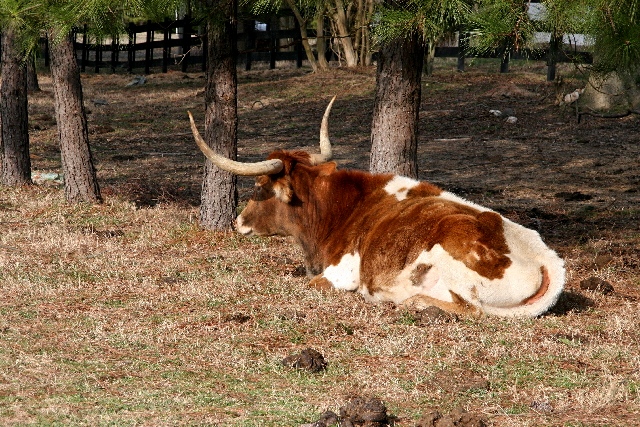
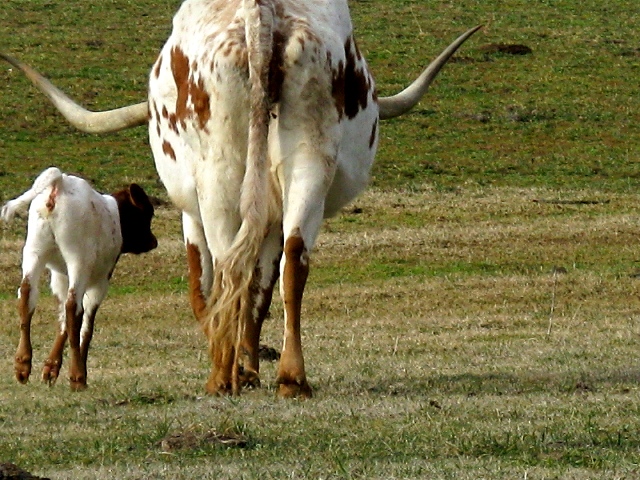
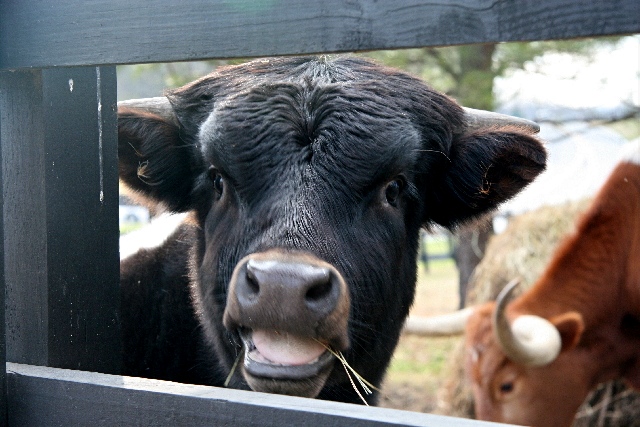
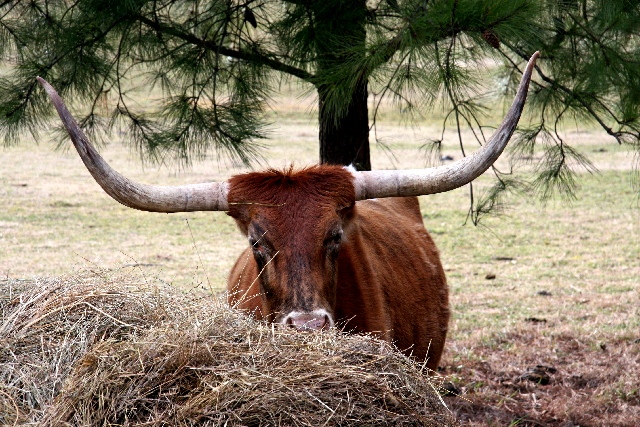
And the fenced pastures that go with the house are now home to a half-dozen Texas longhorn cattle. I have no idea who owns them or how they got to North Carolina, but they are a beauty to behold:

IMG_1807

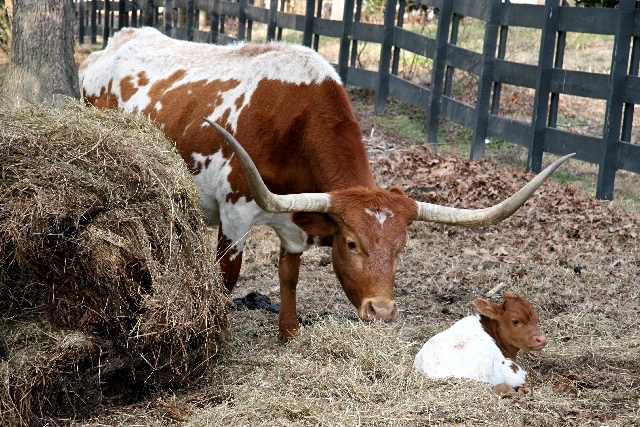
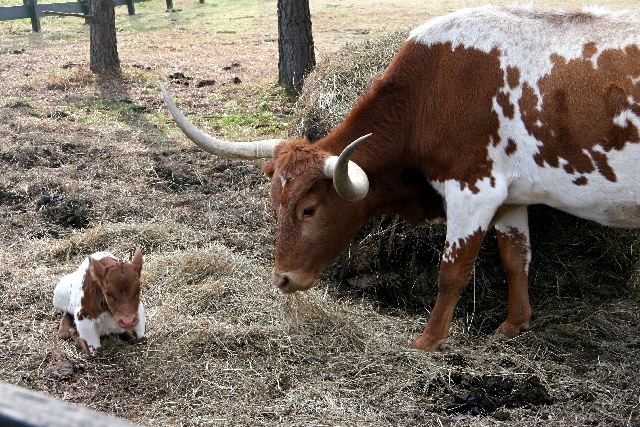
This pair seemed to go together; wherever the big one went the little one was close behind:

IMG_1811

IMG_1813

IMG_1815

In this photo, note how long and thick the tail is on the adult. This gives you an idea of the horror of "tail docking" that is carried out in many commercial factory dairy farms—taking a pair of large bolt cutters and cutting the tail off dairy cows—with no anesthesia—because it's a nuisance in the milking parlor, leaving a stub of 6-8 inches long. Besides enduring the obvious pain, the cow can no longer use her long tail to swish away flies and biting insects. What an abominable practice—harming animals for the convenience of man. (In a previous post, I linked to an ABC Nightline undercover video that shows this practice.)

IMG_2037

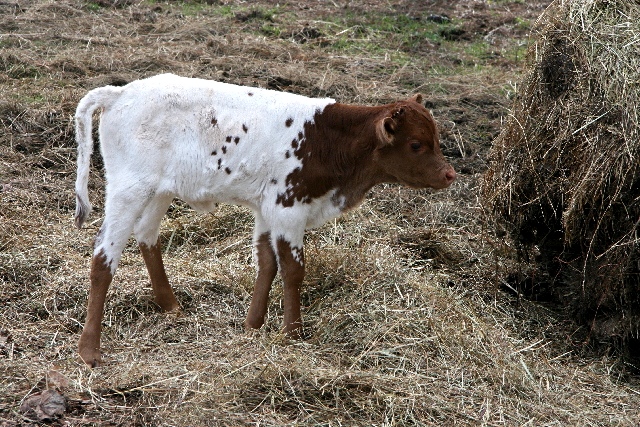
You can see this youngster's horns just beginning to grow:

IMG_1814

It's easy to understand the origin of "Hook 'em, Horns!":

IMG_1818

Sunday, February 7, 2010

School Daze

scan0001

My good buddy, Lile (we saw each other EVERY Sunday at church and spent 11 of 12 of our school years together), sent me this picture from her files. What a treasure! My family's home in Decatur, Alabama, was just a block from our grammar school (dear old Gordon-Bibb), so our house was a not infrequent spot for "field trips" during my five years at that school. This is our first grade class with our dignified and beloved teacher, Mrs. Poer. Lile and I have put our heads together and remembered a half-dozen or more of these 56-year-old faces. (Note the April 1955 notation on the photo's top edge.)

Sweet Lile is on the top row, upper right corner, and yours truly is on the top row, two spaces down from Lile—elbows on knees, brow furrowed, cowlick in place. That was a great house with stairs large enough to hold the whole class. Oh, for such a house today!

Saturday, February 6, 2010

Wireless Radiation: The Research Continues

Gentlemen's Quarterly (GQ) magazine has a lengthy article about the ongoing research into the dangers of wireless radiation (cell phones, in-home WiFi systems, the increasing installation of community-based WiMax systems). Statements like these are worrisome:
The only honest way to think of our cell phones is that they are tiny, low-power microwave ovens, without walls, that we hold against the sides of our heads. . . .

Lai reviewed 350 studies and found that about half showed bioeffects from EM radiation emitted by cell phones. But when he took into consideration the funding sources for those 350 studies, the results changed dramatically. Only 25 percent of the studies paid for by the industry showed effects, compared with 75 percent of those studies that were independently funded. . . .

If all this sounds like some abandoned X-Files script, consider the history of suppression of evidence in the major issues of consumer health over the past half century. Big Tobacco hid the dangers of smoking and the addictiveness of nicotine, supporting its position with countless deceptive studies. Asbestos manufacturers hid evidence that the mineral was dangerous even as tens of thousands of workers died from exposure; the makers of DDT and Agent Orange stood behind their products even as it became clear that the herbicides caused cancer. That the cell-phone industry, which last year posted revenues in the hundreds of billions of dollars, has an incentive to shut down research showing the dangers of cell-phone use is not a radical notion. . . .

"It never ceases to surprise me that people will fight a cell tower going up in their neighborhoods," Blake Levitt, author of Electromagnetic Fields: A Consumer's Guide to the Issues and How to Protect Ourselves, told me. "Then they'll install a Wi-Fi system in their homes. That's like inviting a cell tower indoors." . . .

Evening Well Spent

IMG_2025

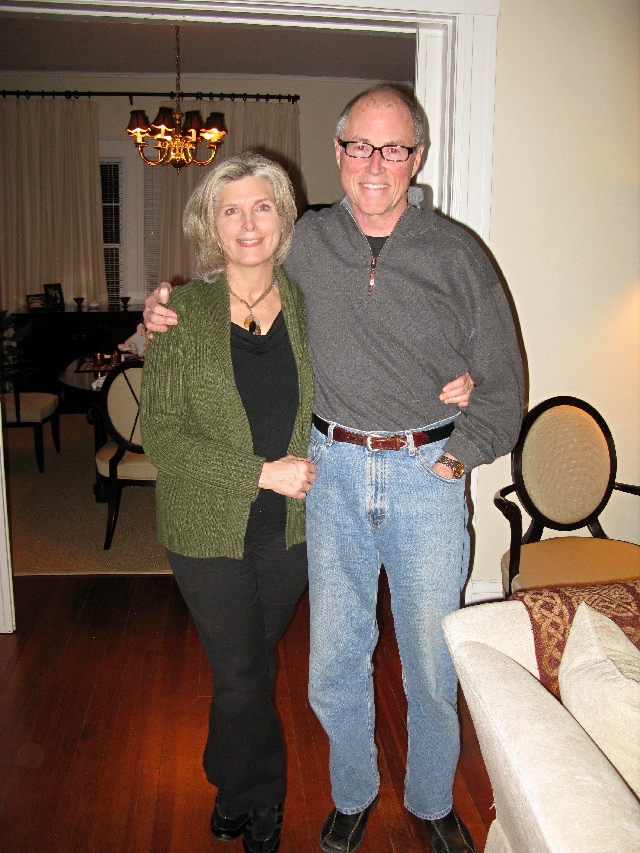
Spent last evening with old friends Phil and Laurie whom I haven't seen in several years—they remedied the absence by having me over for supper. Laurie's daughter, Dara, prepared a beautiful five-course vegan Thai feast that was out of this world. As much as I enjoy all things "food," for health and pleasure, I lament my ignorance of the Asian pantry. The spices and flavors—not to mention the presentation—are a world apart for me, my palate being the poorer for it. So thanks for your efforts, Dara and Laurie—I felt like I was dining in a Michelin three-star restaurant down a side-street in Bangkok, known only to the most well-connected locals. Candles, music, and five different bowls—it was hard to know where to begin. At the end of the meal, when the girls were momentarily out of sight, Phil and I took bowls in hand and drained them dry. I wish I could recite all the ingredients—by Dara's quick count there were 20-30 different foods and spices involved. I wish I'd taken a picture of the table before we began.

Laurie and Phil's house is one of my favorites—a 1940's (?) era Arts and Crafts bungalow in an older part of Charlotte where houses have personality and charm, inside and out. Laurie is an artistic, creative freelance writer (articles and first-person essays) and Phil is an artistic Mad Man—okay, not Madison Avenue advertising, but close. He is in the process of creating his own line of greeting cards. My jaw dropped at the whimsical hand-drawn prototypes he showed me. I hope they'll be in a store and on a web site near you in the not-too-distant future.

My jaw really dropped when I read the article Laurie wrote for Charlotte magazine about Phil's journey to sell his beloved 1952 Fender Telecaster guitar. In near perfect condition, these early-Fifties "Teles" are a holy grail among vintage collectors and players. Long story short: Phil bought his four decades ago for $75 in a pawn shop and sold it last year for $52,000 at the Dallas International Guitar Festival. (Yes, you read that right.) Inflation notwithstanding, that's not a bad ROI. So, in the words of Jon Bon Jovie, "hold on to what you've got."

Thanks, Phil, Laurie, and Dara for a wonderful evening of sharing and spiritual nourishment—and for an amazing meal.

[P.S. In Dara, the creative acorn didn't fall far from the tree. She has her own line of hand-made women's fashions on Etsy.com. Check out her store here.)

Friday, February 5, 2010

Victory! The Farmers Have Spoken

The New York Times is reporting this morning that Secretary of Agriculture Tom Vilsack will announce today the scrapping of plans for the National Animal Identification System (NAIS) program—a plan proposed under the Bush '43 administration to tag all livestock and track them in a database as a means of isolating infected animals in case of a disease outbreak. The program has met with significant resistance from livestock farmers. I reported in a previous post how Wendell Berry testified before a Congressional hearing that he would go to jail before allowing his animals to be tagged. The Department of Agriculture is going back to the drawing board to design a new, less intrusive plan.

The whole concept of NAIS was rife with problems: a huge expense for farmers, the commodification of livestock, and misplaced priorities. If USDA wants to do something about the spread of animal-based disease it ought to focus on preventing the occurrence of the disease before containing its spread. And most animal-based diseases arise because of commercial livestock practices: Confined Animal Feeding Operations (CAFOs), the feeding of infected animal parts back to well animals, and the over-medication of commercial livestock making them resistant to new strains of disease. The best way to prevent disease in livestock is to pasture them and feed them on a wide variety of grasses and herbs, an environment naturally suited to suppressing the spread of disease.

Thankfully Secretary Vilsack listened to the voices of the people his policies would impact most—though eliminating NAIS does little to change the policies that allow for diseases to arise and flourish in the currently legal livestock factory-farms.

Chasing Legends

A new documentary on the Tour de France, Chasing Legends, will be released in May of this year. Following are the teaser and trailer for the film:


[Note: in this trailer, when legendary Tour commentator Phil Liggett refers to mountains being "20 miles high," he's referring to the distance required to climb up and over the summit, not the vertical distance from sea level!]

Tuesday, February 2, 2010

Doing His Thing


If there are two things son David knows well, they are "film" and "discussions." He had a chance to do both in Philly a few days ago. I've never known a David-discussion to be less than "lively!" Congrats on finishing the Master's degree, Dave.

Monday, February 1, 2010

Wow!

Oren Lavie is an Israeli-born singer/songwriter whose music video for his song "Her Morning Elegance" was nominated for a 2010 Grammy in the "Short Form Music Video" category. It has been watched 10.3 million times on YouTube and it's easy to see why. The video was shot in stop-action animation form—using a film camera to shoot one still frame at a time which then gives the impression of a movie when played. This is an amazingly creative video:

Winter Cauliflower

Over the last few days I had not checked the two cauliflower plants growing in a concrete planter on my front porch. When I did I discovered both have heads that have appeared in the midst of the freezing weather we've had. Normally, the large leaves of the cauliflower plant are pulled across and over the heads and tied in place to protect them from sunlight, producing the typical "white" cauliflower we see in the stores. These heads are slightly yellow since they haven't been protected: (this is actually two shots of the same head)

IMG_2022

IMG_2023

Saturday, January 30, 2010

Let's Hope She's Right

Here's Peggy Noonan's assessment of the status of Obamacare based on what the president said in the State of the Union Address: (read the whole column here)
The president did not speak of health care until a half hour in. "As temperatures cool, I want everyone to take another look at the plan we've proposed." Then, "If anyone has a better idea, let me know." Those bland little sentences hidden in plain sight heralded an epic fact: The battle over the president's health-care plan is over, and the plan will not be imposed on the country. Waxing boring on the virtues of the bill was a rhetorical way to obscure the fact that it is dead. To say, "I'm licked and it's done" would have been damagingly memorable. Instead he blithely vowed to move forward, and moved on. The bill will now get lost in the mists and disappear. It is a collapsed soufflé in an unused kitchen in the back of an empty house. Now and then the president will speak of it to rouse his base and remind them of his efforts.

Food Esthetics, Food Ethics

But if there is a food politics, there are also a food esthetics and a food ethics, neither of which is dissociated from politics. Like industrial sex, industrial eating has become a degraded, poor, and paltry thing. Our kitchens and other eating places more and more resemble filling stations, as our homes more and more resemble motels. "Life is not very interesting," we seem to have decided. "Let its satisfactions be minimal, perfunctory, and fast." We hurry through our meals to go to work and hurry through our work in order to "recreat" ourselves in the evenings and on weekends and vacations. And then we hurry, with the greatest possible speed and noise and violence, through our recreation—for what? To eat the billionth hamburger at some fast-food joint hellbent on increasing the "quality" of our life? And all this is carried out in a remarkable obliviousness to the causes and effects, the possibilities and the purposes, of the life of the body in this world.
(Wendell Berry, "The Pleasures of Eating" (1989), in Bringing It to the Table—On Farming and Food, pp. 229-230 [2009])

Friday, January 29, 2010

The Third Way

When reading in Genesis 24 this morning I was struck by the words of a relative of Abraham.

Abraham had sent his servant from Canaan back to Mesopotamia to find a wife for his (A.'s) son, Isaac. The servant asked God to show him the right woman through specific signs. When a young woman he encountered at the village well, Rebekah, fulfilled those signs, and was a relative of Abraham to boot, he concluded she must be the one for Isaac. When the servant then met Rebekah's family and recounted his mission and the fulfillment of the signs, Rebekah's brother and father agreed that the whole thing was from the Lord. It was their words of response, which amounted to an agreement, that struck me:
"The thing has come from the Lord; we cannot speak to you bad or good. Behold, Rebekah is before you; take her and go, and let her be the wife of your master's son, as the Lord has spoken" (verses 50-51; ESV, italics added).
The new English Standard Version is a very literal translation ("bad or good"). The New Living Translation (second ed.) renders it this way:
"The Lord has obviously brought you here, so there is nothing we can say."
Both translations are helpful. "Bad or good" reflects how quick we are as humans to lump life into two categories when considering the acts of God: they are either bad or good. But Rebekah's father and brother resisted that temptation by saying, "We cannot speak . . ." about the morality of the event. Indeed, "There is nothing we can say." They recused themselves, disqualified themselves, from forming, or at least uttering, an opinion on God's ways.

That seems wise to me. Rather than being a cop-out, it's reflective of what God said through the prophet Isaiah:

"My thoughts are nothing like your thoughts," says the Lord.
"And my ways are far beyond anything you could imagine.
For just as the heavens are higher than the earth,
so my ways are higher than your ways
and my thoughts higher than your thoughts."
(55:8, NLT)

It also calls to mind the apostle Paul's response to those who questioned God's will and ways:
Who are you, a mere human being, to argue with God? Should the thing that was created say to the one who created it, "Why have you made me like this?" (Romans 9:20b, NLT)
There are so many "acts of God" on which we make quick judgments—God's command to kill certain people in the Old Testament or natural disasters in our day; we are quick to label His acts "bad or good." In truth, those are our ways (bad and good), not God's. He apparently has a "third way" that is different from ours; higher than ours (transrational?). Perhaps the better part of wisdom is to withhold applying any of our categories to Him as long as we are looking through a glass darkly from our vantage point on earth.

Thursday, January 28, 2010

Publisher of Forbes Magazine Goes (Mostly) Vegan

Rich Karlgaard is the publisher of Forbes magazine—the standard-bearer of American business magazines. I was a Forbes subscriber for many years and loved it but finally had to DNR my subscription when it got too expensive. I especially loved Karlgaard's column in every issue—usually the first thing I read. His columns were fun, smart, honest, and betrayed a Renaissance mind that seem to be aware of almost everything happening in business and culture. He also spoke highly of his church and family life. He was even kind enough to respond to a couple of emails I sent commenting on his column. But I never imagined him being anything other than a meat-and-potatoes guy.

So when he wrote an extended post on his personal blog recently about going "mostly" vegan, I was really surprised: "In Praise of (Mostly) Vegan Diets." His reasons for making the change were health-based and he writes positively about the results. (He even became a road biker, another sign of his smarts. jk) From his description it sounds like he's eating 80-85% vegan (breakfast and lunch) and then eating whatever his wife has fixed for supper—but piling on the veggies and going light on the meat even at that meal.

I was duly impressed. This is a smart guy who looked at the nutritional evidence and decided it would be to his advantage to make a serious paradigm shift. In fact, in another blog post predicting 20 things we might see happen in the 2010's, he wrote . . .
1. Vegan Republicans
All-plant diets, proselytized so far mostly by PETA punks, Prius drivers, old hippies and
Jack Lalanne, go mainstream. The Engine 2 Diet portends the future.
This "vegan thing" is gaining serious traction. I can't remember who it was, but "somebody now-dead but famous" (I think; it's one of those quotes I remember but not the source) wrote that the day will come when the human race looks back on our killing and eating animals with incredulity; wondering how we could ever have done that. That's not why Rich Karlgaard (mostly) stopped eating meat, but the net result is the same. I don't know if that will ever happen, but it's a happy thought.

Wednesday, January 27, 2010

Haiti Report

Following is a video report from Mark Driscoll, teaching pastor at Mars Hill Church in Seattle, on the condition of the church in Haiti following the earthquakes.He and a team spent 32 hours on the ground four days after the 'quake (also delivering many relief supplies) assessing the situation. Befitting Driscoll's style, it's action-oriented and hard-hitting. (You can watch a larger-format version at the church's web site here.)

Apple Is Shaking the Tree Again

Apple, Inc., releases its new tablet computer today. One of the anticipated features is that the tablet will serve as an e-reader like Amazon's Kindle. But leave it to Apple to create a pricing model that may be more attractive to publishers: