Sunday, October 31, 2010

Ashe County II

Made another day trip to Ashe County, NC, today -- this time to take a second look at a house and property I've been studying for the last two weeks.

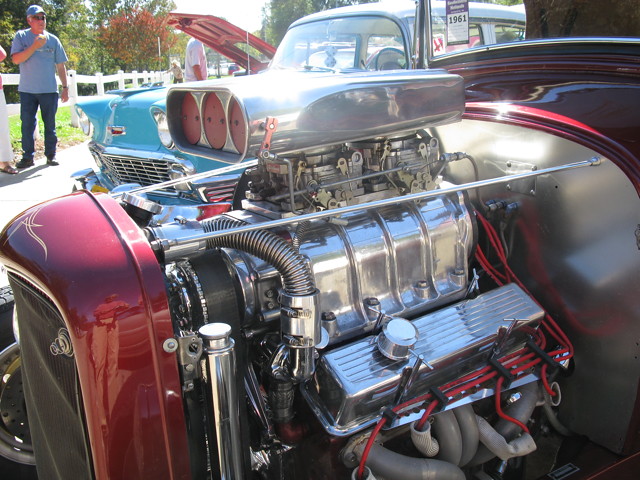
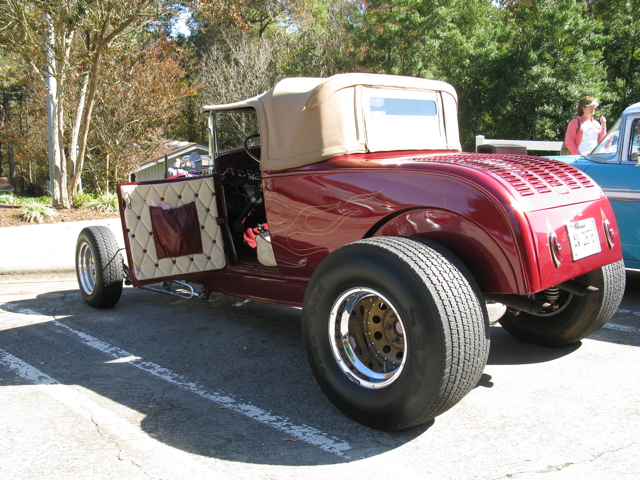
This was one of the highlights of the trip -- a circa 1932 Ford roadster. My brother and I used to build models of these when I was young.

IMG_2854

We built models of engines just like this: a Chevy (probably) small-block V-8 with a blower (supercharger) and twin 'quad carbs. (Street talk, 'ya know.) When you goose the throttle, the three round discs on the front of the intake open and force huge amounts of air down through the carbs and the mixture is compressed by the paddles inside the blower (the big chrome unit underneath the two carburetors) so as to force larger amounts of gas/air mix into the engine, thus providing greater combustion and more speed. Oh, man . . .
IMG_2852

IMG_2855

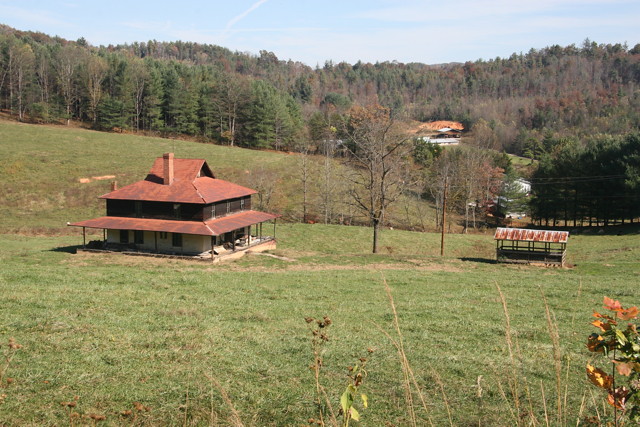
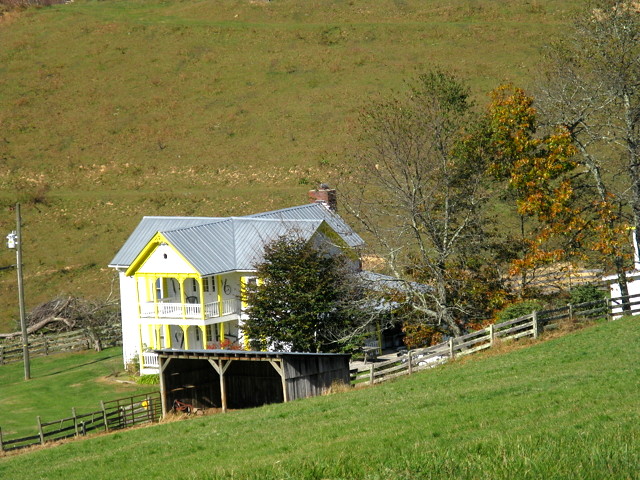
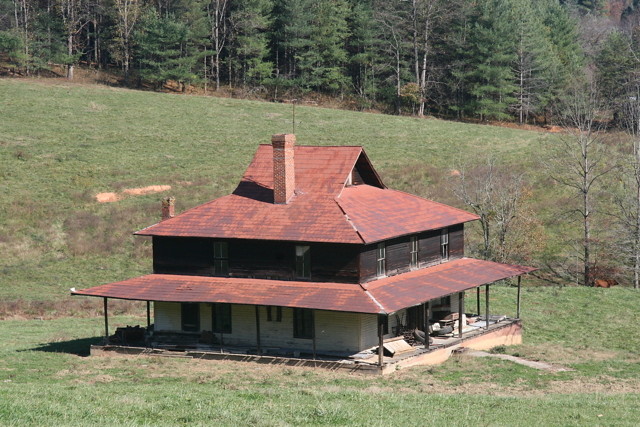
I've been captivated by this house for years. It's on Highway 16 north of Wilksboro, headed toward West Jefferson. It's been sitting exactly like this for the five years I've passed it. It sits in an odd place -- on a slope in a pasture. I've always liked the wrap-around porch and the obvious, ample square footage. I can't help but wonder about the people who called this house "home" and why they are no longer there. The world is so full of stories that no one will ever know.
IMG_1907

They did have a nice view . . .

IMG_1908

I first got acquainted with West Jefferson, NC, when my son Daniel and his bride, Jennifer, bought a ROUGH but classic (i.e., old, traditional) mountain cabin just north of the town after graduating from Appalachian State. Pure mountain water came into the cabin through a plastic pipe from a spring that bubbled out of the earth a couple hundred yards up the mountain behind the cabin; the grey water from the kitchen sink ran out into the side yard, which I came to find out was not unusual for old mountain cabins. Their first baby, Ellen, was born in a giant water-birthing pool they set up in the cabin, assisted by a mid-wife. Such is life in the Blue Ridge Mountains of Ashe County.

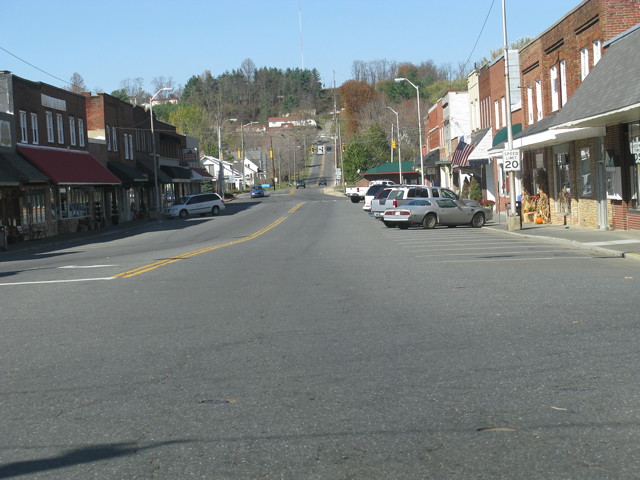
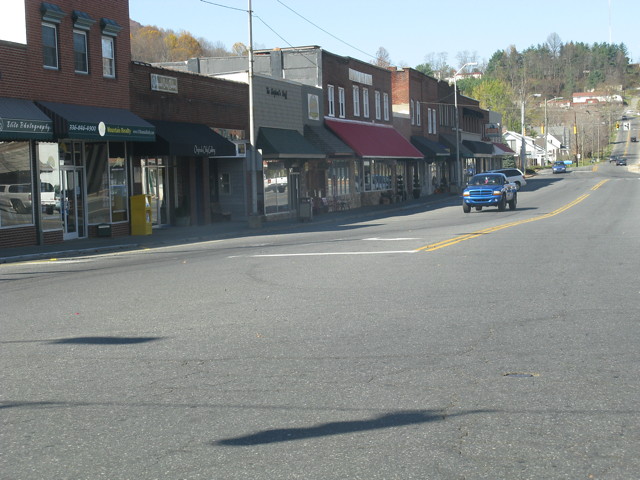
West Jefferson today is growing -- new restaurants, art galleries, and shops are filling the main drag in the old storefronts, and a thriving farmer's market runs two days a week. This is West Jefferson's main street coming into town:
IMG_2862

IMG_2861

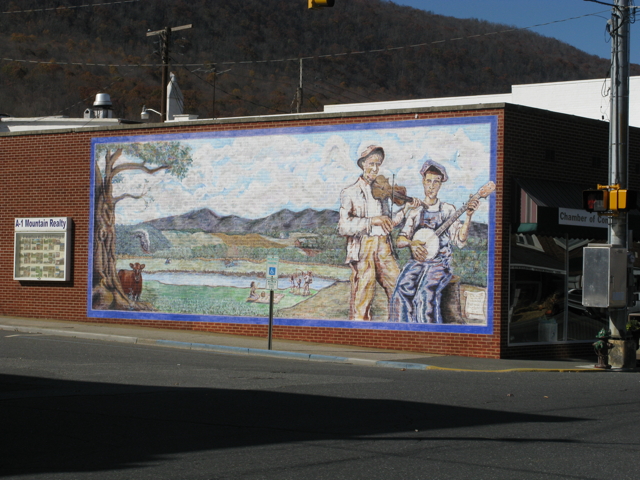
West Jefferson is known for its Appalachian-themed murals painted on the sides of buildings in the downtown area:
IMG_2860

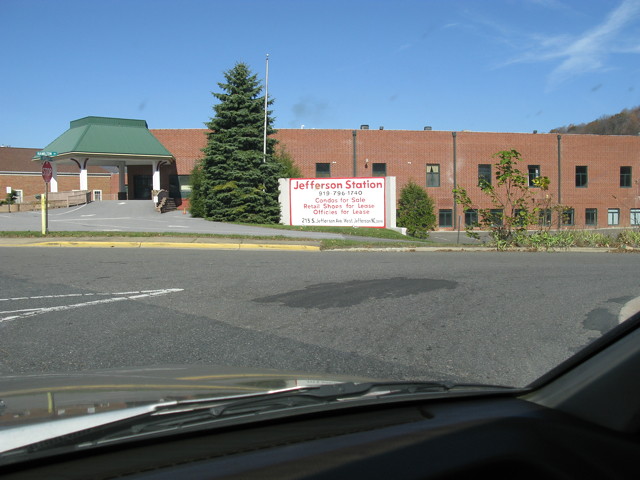
Jefferson Station is a former furniture factory in the heart of downtown WJ. The factory shut down years ago and sat empty until a developer bought it five years ago to turn it into a combination condo/commercial/office space -- not a bad idea. The condos were loft-type, with 24-foot ceilings. I read about the development on the web site of the Mountain Times newspaper published in nearby Boone, NC, and called to see what was the deal. I drove to West Jefferson the next weekend and put down a deposit on a small condo -- they were just beginning to build them out. I hired an architect to draw blueprints for adding a second-floor loft to my condo where I would have my office/work area. It was an awesome floor plan -- about 1,350 square feet total (900 downstairs, 450 in the loft). My plan was to sell my house in Charlotte and move into the condo in WJ for a couple years so I could continue to look for a farm to buy in Ashe County. Long story short -- a couple of family complications developed in Charlotte and I decided it wasn't a good time to move, so I got my deposit back. And the developer put my condo back on the market the next day for $20,000 more than the contract I had signed. So I left 20 G's on the table. A year ago, I saw an ad on a WJ real estate web site for a condominium like mine in Jefferson Station for $40,000 more than my contract had been. I know -- I should have moved, lived there 2-3 years, and sold. HIndsight is a killer:
IMG_2858

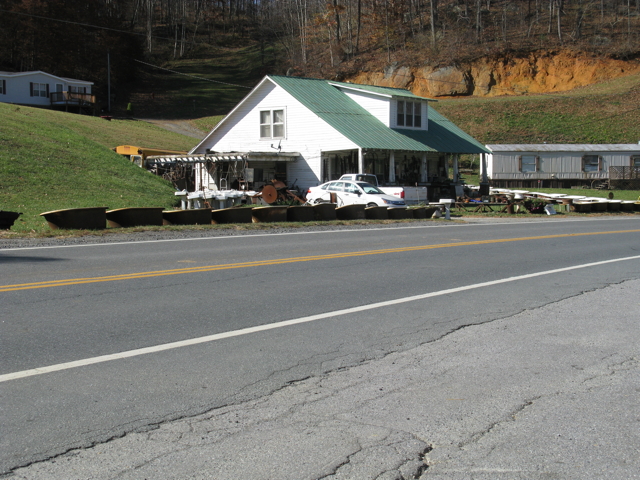
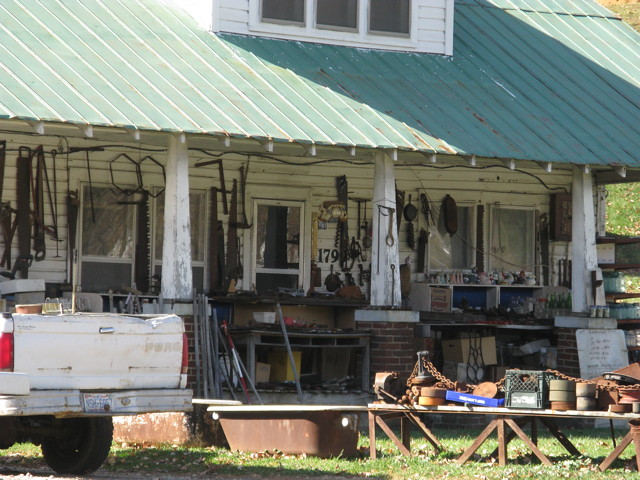
I always laugh when I pass this "store" on the way out of town. This guy specializes in Appalachian cultural miscellany:
IMG_2863

IMG_2865

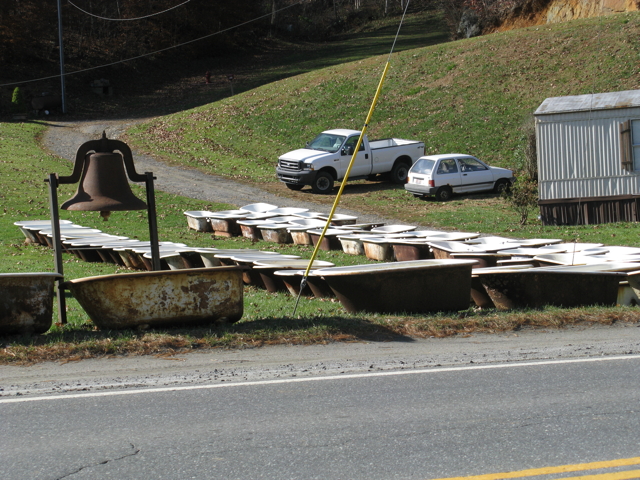
His specialty -- for years -- seems to be old bathtubs. These may be the same ones that were sitting there five years ago. Who buys old bathtubs? Mountain farmers use them as watering troughs for livestock, I know. Other than that . . . ? I'd buy the bell in a heartbeat.
IMG_2866

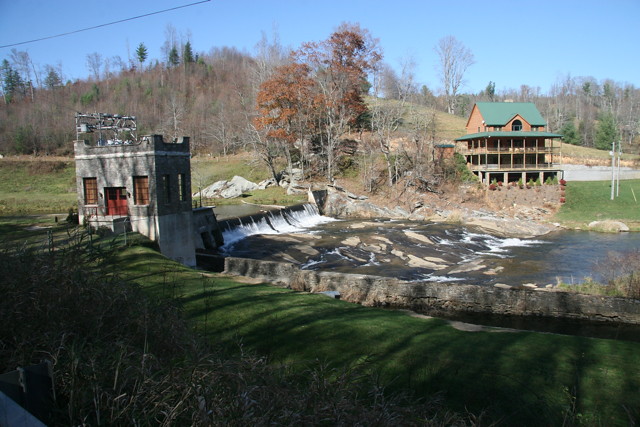
I was a bit early for my appointment to see the house, so drove through Warrensville toward Creston on Highway 88 and stopped to look at this power-generating station on the North Fork of the New River.
IMG_1912

How'd you like to live in that house and fall asleep listening to this every night?


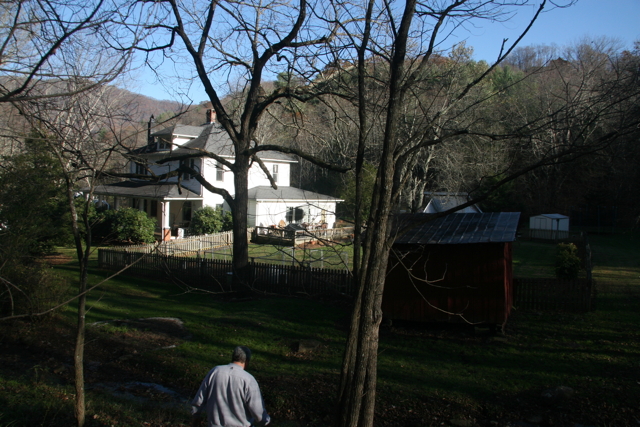
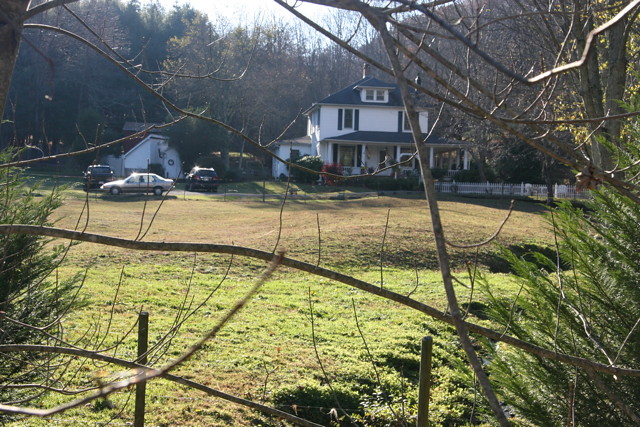
The house I've been looking at is 6-8 miles north of West Jefferson in a VERY small crossroads called Warrensville. The house was built around 1920 by the Roten family who were prominent farmers and business folk in Ashe County. It's been upgraded quite a bit since, and has gone through several owners, but the bones are original and solid. It's one of the most uniquely designed old farmhouses I've seen in terms of the interior layout. All the original wood remains unpainted: solid wood floors and beadboard on the walls and celing. (Pictures of the interior of the house are here.)

The house sits on 4.6 acres with two streams running through the property. Its water comes from a spring that runs into a 500-gallon cistern and bladder system that supplies the hose, with propane and wood-fired boilers (use either/or) for heating the water that runs through radiators in the upstairs. The downstairs is heated by a propane forced-air furnace in the crawl space. Their is a flu in the living room where a traditional wood stove once sat and which could possibly be re-opened. The current owners have a horse that is pastured in the primary open area in front of the house. I would use this rich pasture area -- fertile mountain land with eight years of horse manure mixed in -- for food production:
IMG_1928

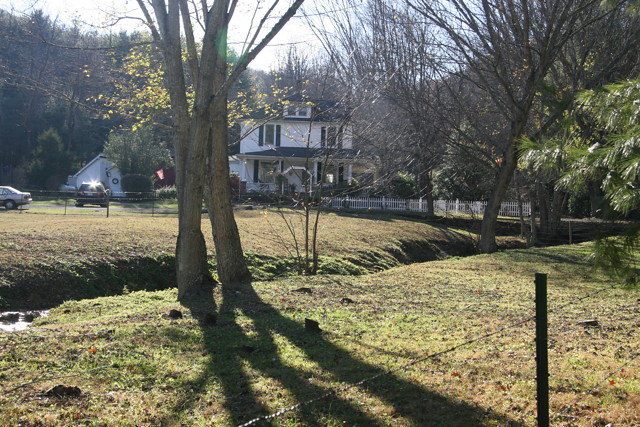
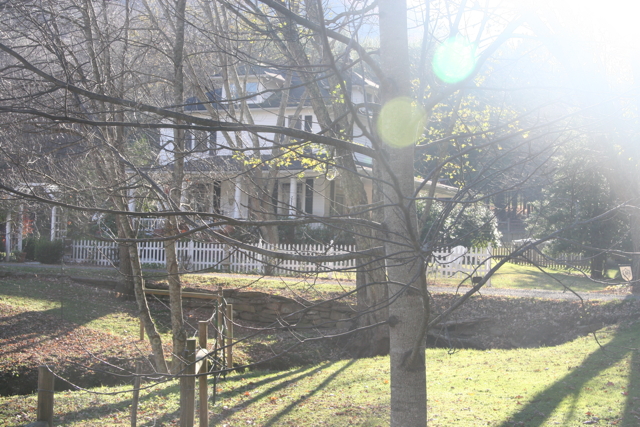
Another view with the larger of the two creek's bed visible in the foreground. The owners showed me a beautiful photograph of the house taken during last year's snow -- you'd think you were looking at a Currier & Ives print, it was so gorgeous:
IMG_1920

IMG_1921

Another view of the creek. The owner said his daughters spent many happy summer days playing in the creek when they were young:
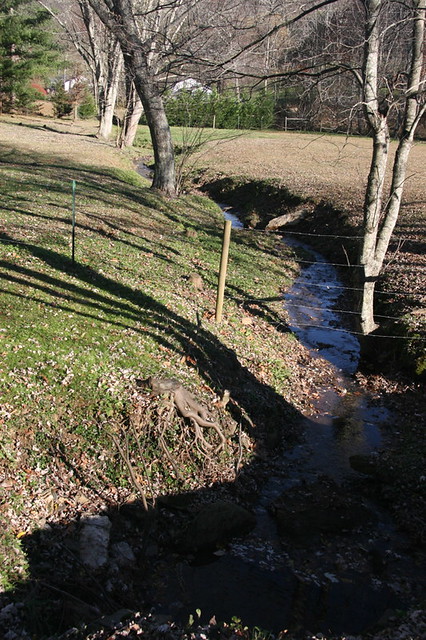
IMG_1917

The back of the house:

IMG_1922

The back and deck from the opposite corner:
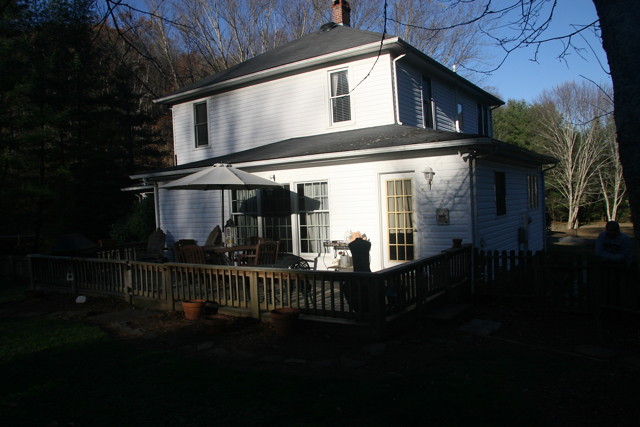
IMG_1931

The owner, Ken, loves this: a tire on the adjoining property had a seedling growing up through it when they bought the house. He decided to let it lay, and now the tree is 20 feet tall, begging the question: "How'd that tire get around that tree?"
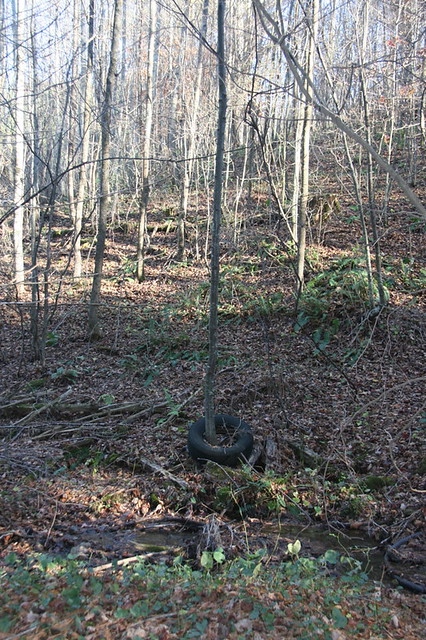
IMG_1923

The spring box, full of perfectly-clear water that comes out of a spring over which the box sits. It has about two feet of ice-cold water in it. Ken slid the cover off and cleaned a handful of tree roots off the filter (growing from the large tree in the upper right of the picture). The water runs through a pipe about a hundred yards to a cistern near the back of the house.
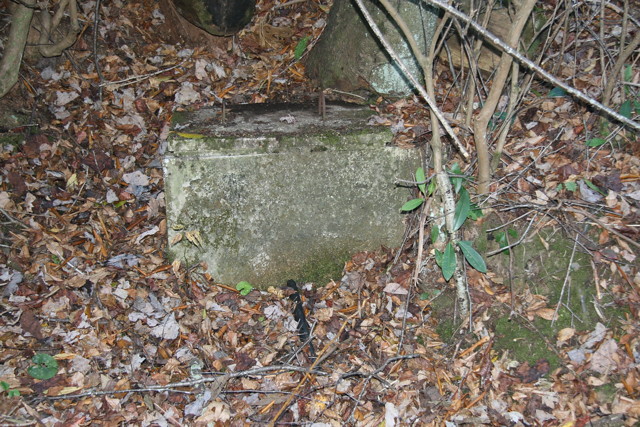
IMG_1925

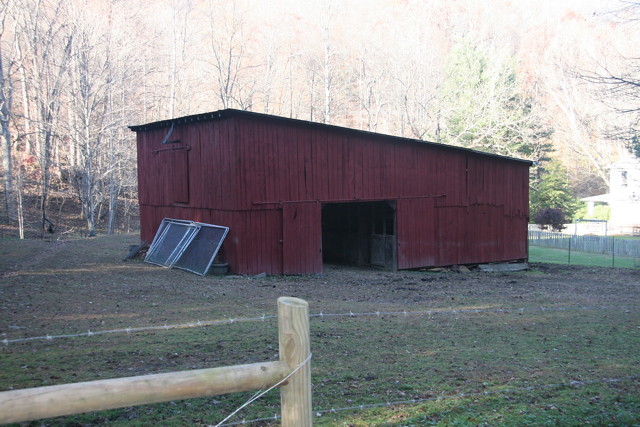
There is a seven-stall barn with a second-floor hay loft -- perfect for little kids to create a fantasy world and for barn-cats to have their litters:
IMG_1924

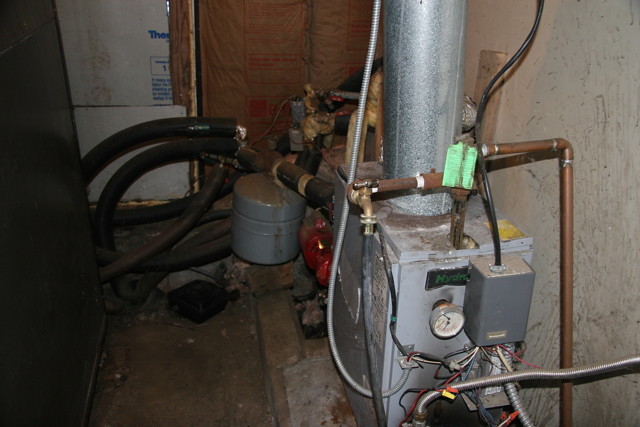
This is the propane boiler that heats water that runs through radiators to heat the second floor of the house. The 750-gallon wood-fired boiler is to the left -- either can be used to heat the circulating water -- wood or propane. You can't see it very well in this photo, but the propane boiler is sitting on top of the concrete spring race -- a long narrow trough that most farmhouses had -- a step up from the traditional spring house -- through which ran ice-cold spring water to keep milk and other foods cold before refrigeration was common. The spring race hasn't been used in years, and would require relocating the propane boiler. But the idea of that cold water running through the race is a HIGHLY romantic notion to me -- one I would love to restore. I have seen them active in two other farmhouses I looked at a few years ago in Ashe County:
IMG_1930

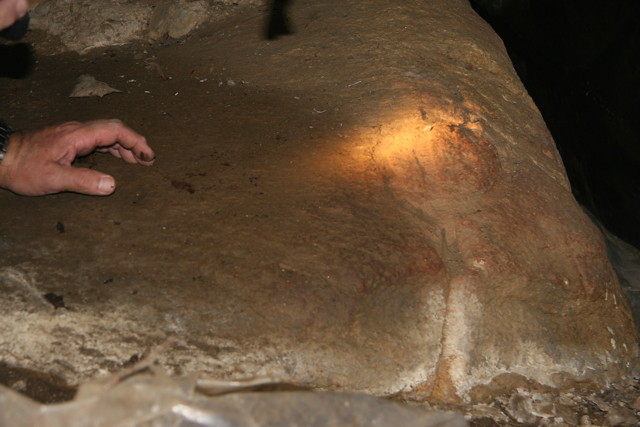
In talking with another West Jefferson couple who lived in the house for 19 years, selling about 20 years ago, the wife told me about a huge stone under the house that had some kind of "carving" on the face of it -- possibly from Indians or settlers many years ago. The house was built over the stone and the stone served as a base for a pier supporting the house's foundation. Ken was kind enough to go into the crawl space and show me the stone. The area where the light is shining is the carved portion -- difficult to tell what it represents. They've never had it examined by an artifact expert -- but it would be fun to explore:
IMG_1929

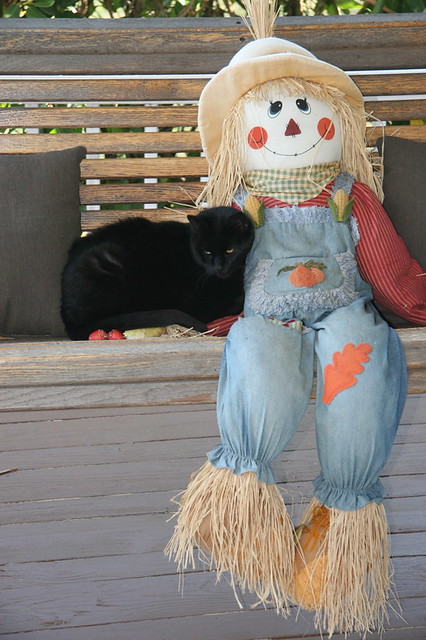
And the requisite farm cat cuddled up next to the scarecrow in the swing on the front porch:
IMG_1914

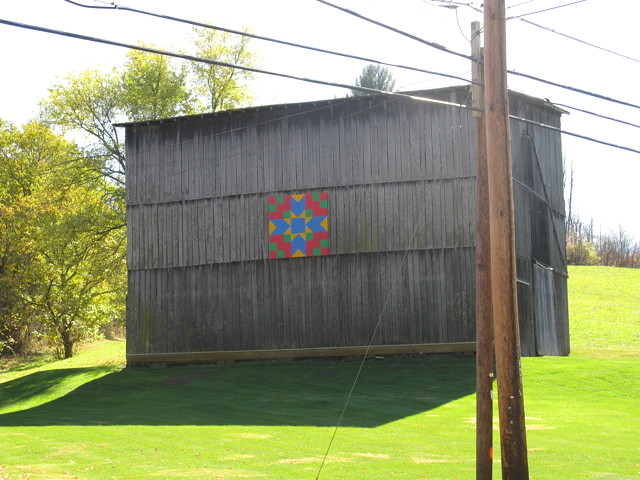
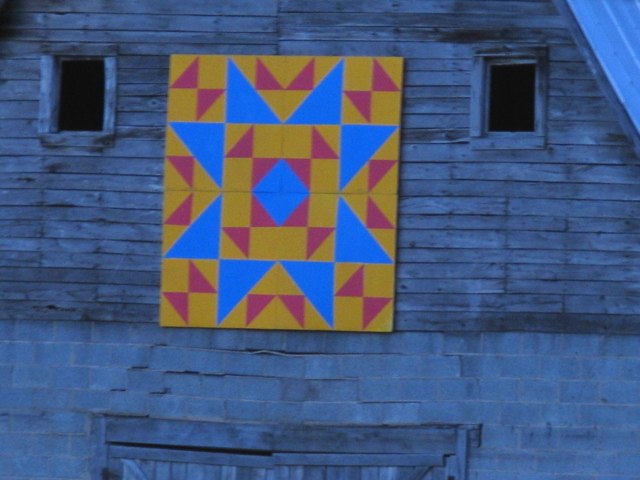
Driving back on Highway 163 outside West Jefferson, saw another of the traditional quilt blocks painted on the side of a barn, part of the Quilt Trails of Western North Carolina project. (It was almost dark -- not much light on the picture.)
IMG_2872

What do you think? The house is being shown by realtors almost daily -- five showings this weekend. It's historic, priced fairly, and in move-in condition (the bathrooms and kitchen have all been seriously upgraded -- one-year old stainless appliances in the kitchen, etc). I don't see it lasting very long.

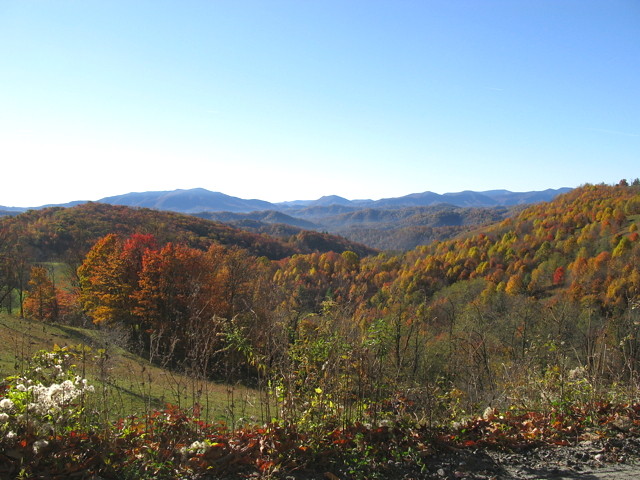
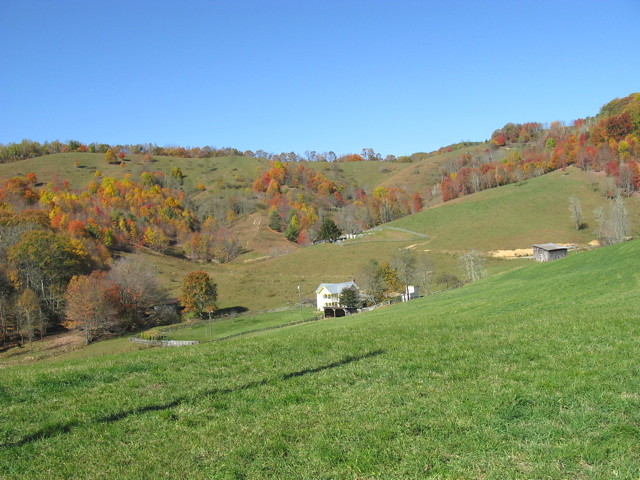
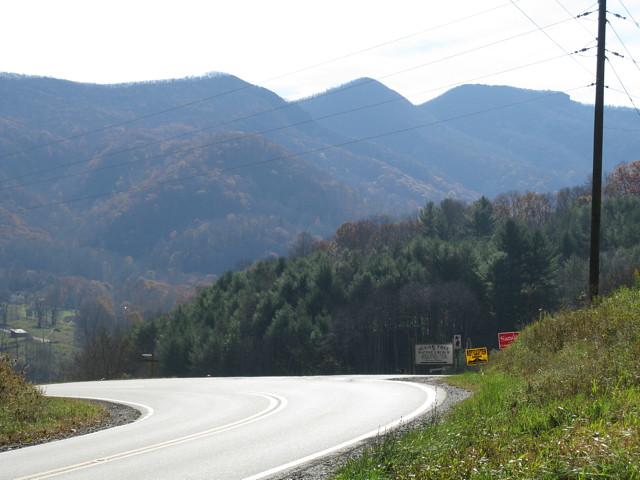
This is what keeps me going back to the Blue Ridge Mountains:
IMG_2867

Wednesday, October 27, 2010

Milk

The human body has no more need for cows' milk than it does for dogs' milk, horses' milk, or giraffes' milk.

~ Michael Klapper, MD

(Thanks to thesoulfuleye.com for the quote.)

Monday, October 25, 2010

Fiddlin' Around in Ashe County

This past Saturday I took a day-trip to Ashe County, NC, for two reasons: to view a small property (100-year-old farmhouse on just under five acres) and to meet Audrey Hash Ham, a well-known fiddle maker in the mountains and daughter of the (late) legendary fiddle maker, Albert Hash. More about the property in another post --

Leaving the Charlotte area at the crack of dawn, heading north:

IMG_2789

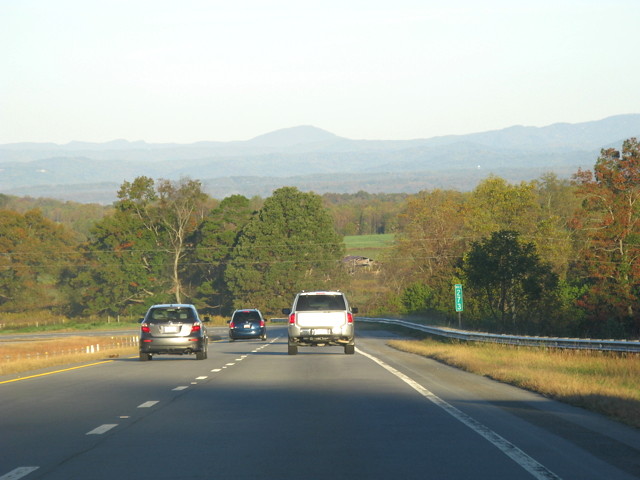
On Highway 421, headed west toward Wilksboro, you come over a rise and catch the first sight of the beautiful Blue Ridge Mountains rising in the distance. A gorgeous sight:

IMG_2795

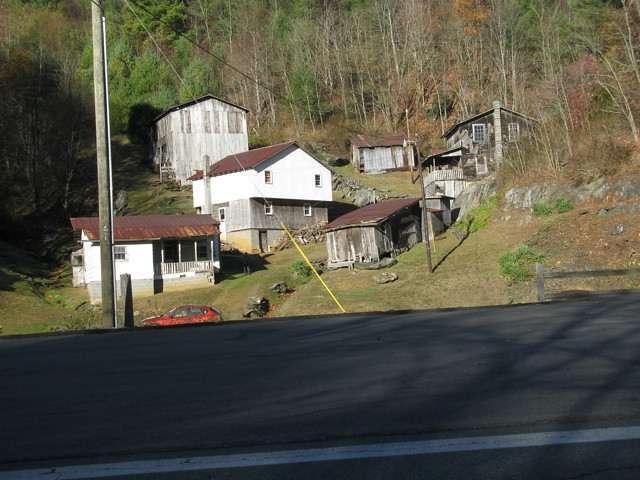
The Ashe County imitation of a Swiss mountainside collection of cottages. Who says the sides of mountains aren't valuable? This was taken between West Jefferson and Warrensville. On a trip to the area a few years ago, I saw a beautiful painting of this very collection of buildings with the Virginia Creeper running along the tracks at the bottom of the mountain. The Virginia Creeper was a steam locomotive rail line that was built in this area in the early 20th century to haul out the massive virgin timber that was being cut off the mountains. The painting was contemporary—the artist had painted these houses and inserted the Virginia Creeper train into the picture as it would have looked a hundred years ago. The owner of the painting told me that an elderly local resident once saw the painting and said, "That's not right." She pointed to one of the buildings in this photo and said, "That house right there wasn't built when the Creeper was running through the area. It was built later." That's the kind of priceless information that passes out of existence with the patriarchs and matriarchs of the world:

IMG_2796

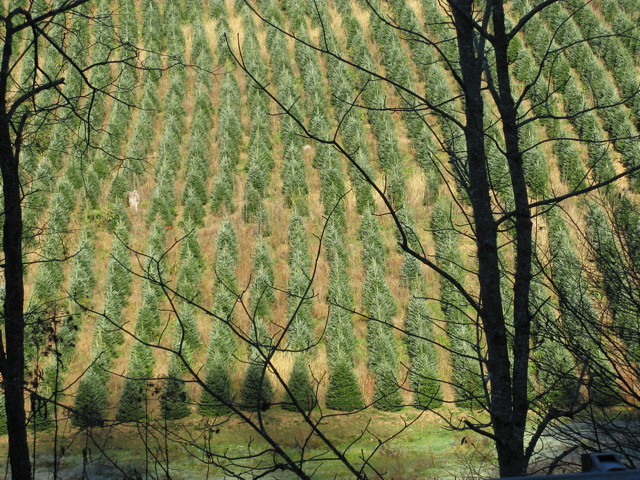
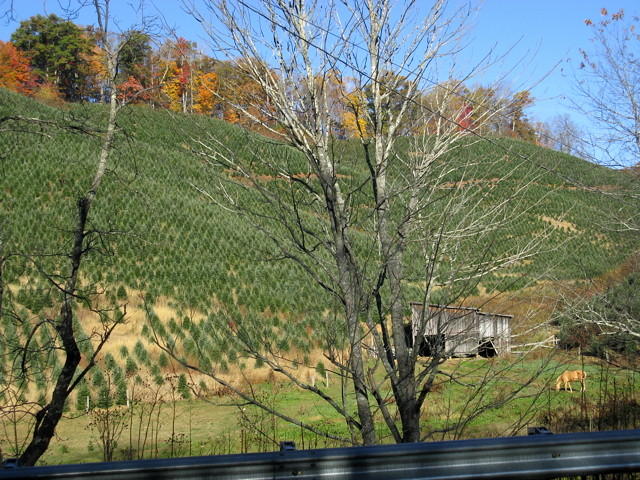
Mountainsides in Ashe County are now used to grow Christmas trees by the millions:

IMG_2799

IMG_2800

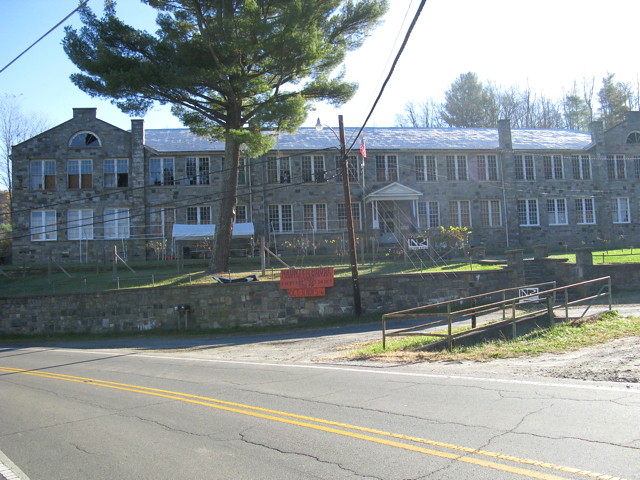
The route to Audrey Hash Ham's place led me through Lansing and a fresh look at the old Lansing School. This noble structure was built of stone back in the New Deal days when Roosevelt put people to work all over the country building things, some of which weren't needed. Ashe County was even more sparsely populated then than now, yet this school was built and used by the children that could make their way to it. I was soon to learn that Audrey Hash Ham, living in Grayson County, VA, just over the NC-VA border, attended this school through the 8th grade. When I first saw this silent memorial standing empty 4-5 years ago on my first trip to Lansing, I immediately wondered if it could be bought and put to some good use -- a craft center or community center or some such thing. It now houses a winery, so at least it's being used for something. What a gorgeous building -- I remember looking in the broken windows at the HUGE, high-ceiling classrooms and solid wood floors and thinking, "What a shame." The handrails in the foreground of this picture are for stairs that go down to a tunnel bored under the highway so children could have safe passage to the ball fields across the road:

IMG_2798

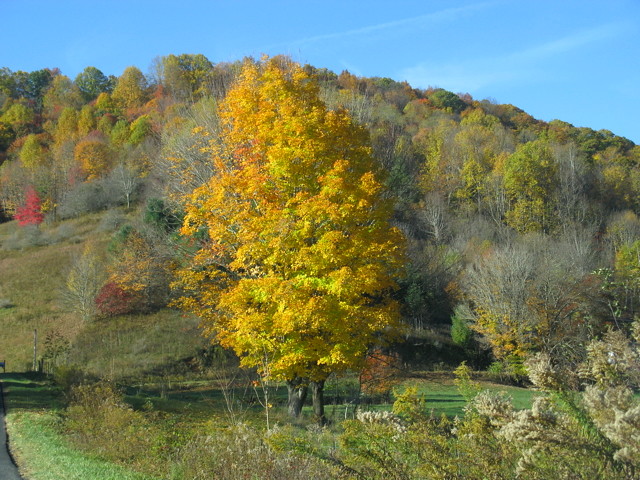
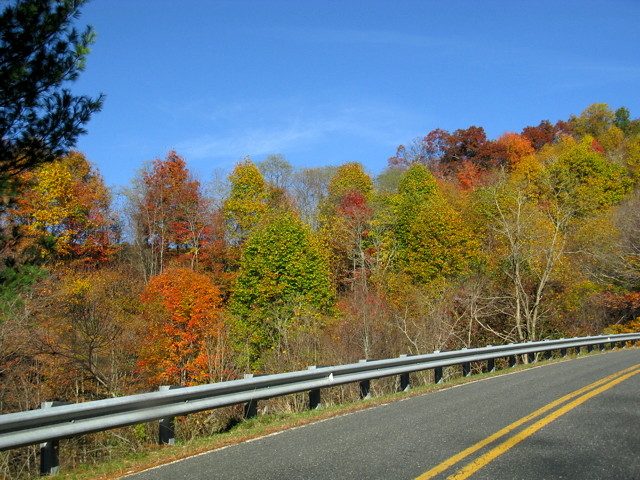
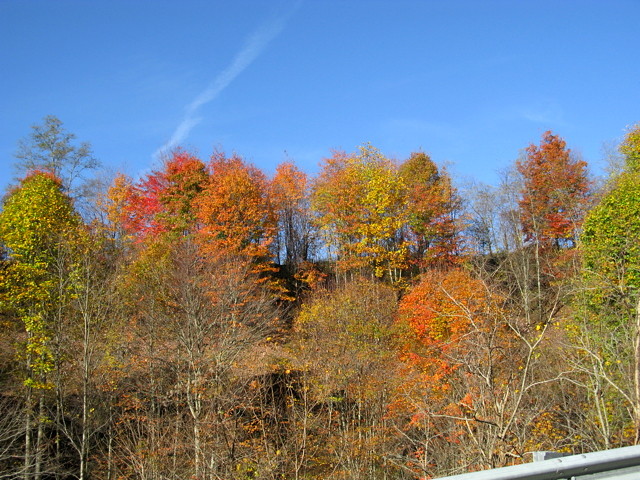
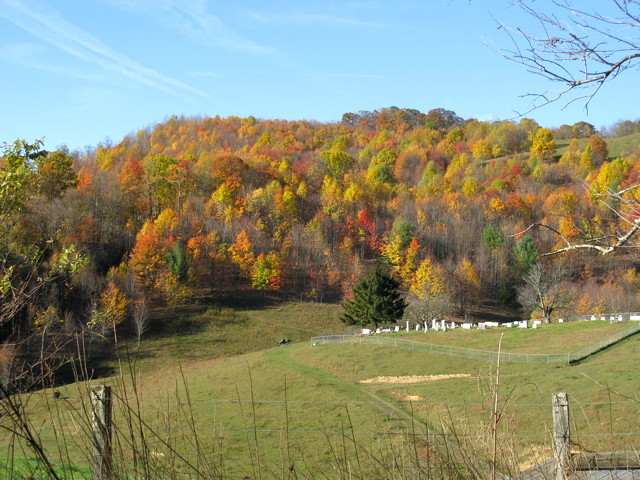
To find Audrey Hash Ham, I was headed for a gravel road north of Lansing called Bear Wallow Road -- seriously -- that looked to be almost on the NC-VA border. It was a good weekend to go -- the heart of the Appalachian leaf season:

IMG_2801

IMG_2803

IMG_2804

IMG_2806

The roads were paved into the seriously-high mountains until I hit Bear Wallow Road, which was gravel. It climbed up and up and up until this kind of view was possible:

IMG_2809

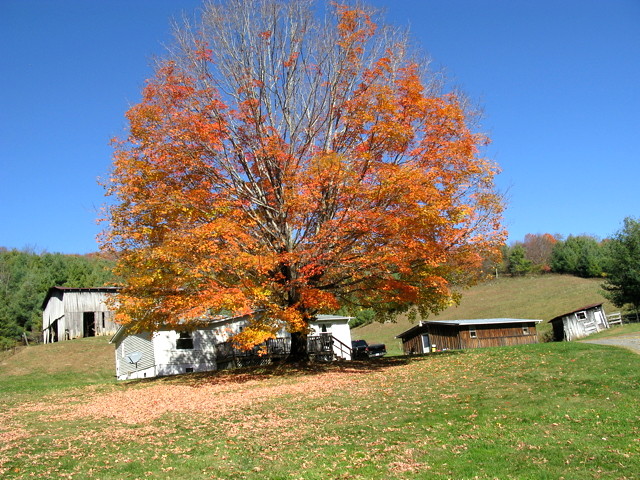
I went past Audrey's place and stopped twice to ask directions from a couple of lovely mountain folks. Houses are about a half-mile apart, the road being single lane until you reach a driveway where you can turn around. I eventually found Audrey's (and husband Bob's) double-wide sitting beneath a HUGE maple. The NC-VA border runs through their front yard, their trailer and barns being in VA, the front yard and driveway being in NC. That's Audrey's workshop to the right, requisite mountain barn in the background:

IMG_2826

Albert Hash built instruments on the side. He was a founding member of the Whitetop Mountain band, one of the earliest of the now plentiful old time/traditional bluegrass mountain bands. It's still in existence today, though with different members. His fiddles were highly sought after, and he was an instrument-making mentor to legendary guitar-maker Wayne Henderson who lives and builds guitars in Rugby, VA, in Grayson County (pop. 7). Eric Clapton wanted one of Henderson's guitars a few years ago and Wayne put him on the list along with everybody else who wanted one. And he finally got it 6-7 years later. Pre-owned Henderson guitars (if you can find one) now sell for around $15,000 or more.

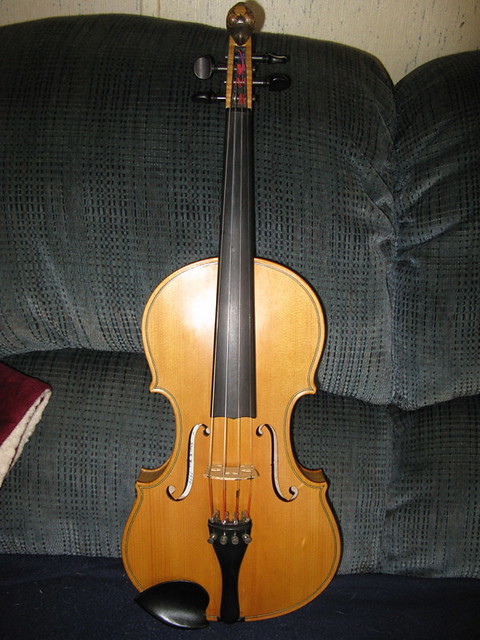
Albert's daughter, Audrey Hash, began building instruments as a young girl, making about a hundred dulcimers before turning to fiddles, of which she reckons she has made about 80-85. She only has one of her father's fiddles -- but it's beautiful:

IMG_2813

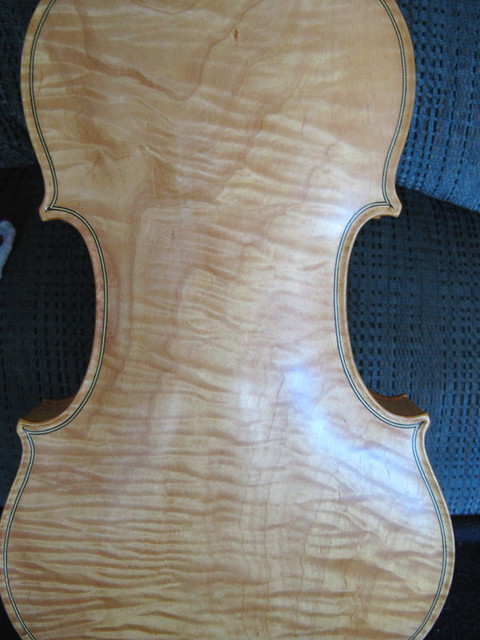
Maple is the standard wood for fiddles, this one remaining unstained with a beautiful one-piece back:

IMG_2817

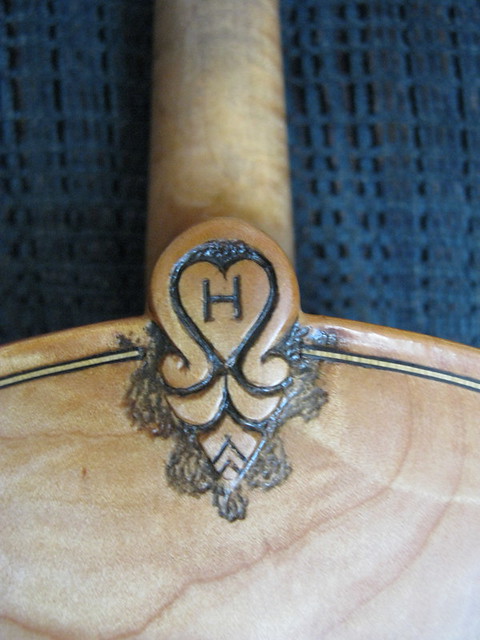
A signature "H" is carved into the neck's heel:

IMG_2816

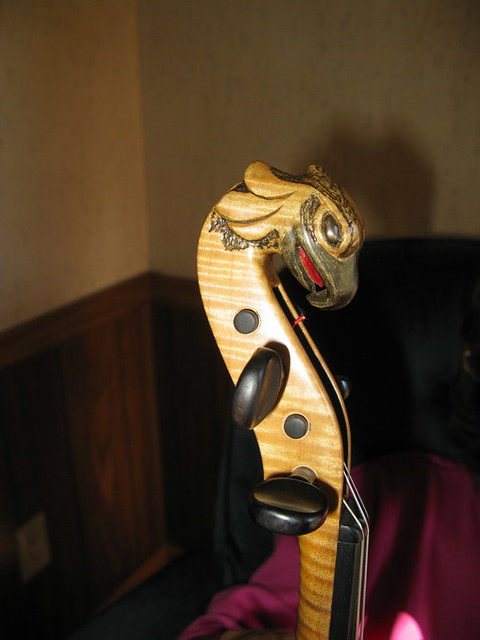
And an eagle's head in place of the traditional scroll:

IMG_2821

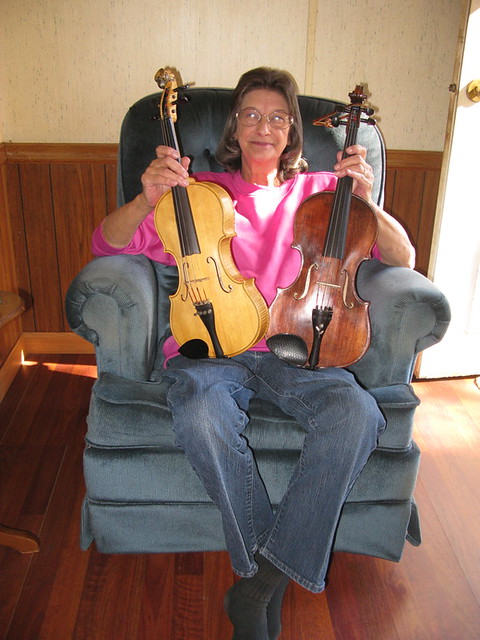
Audrey Hash Ham, holding her father's fiddle (on the left) and one of her own built in 2009 -- stained a reddish mahogany color (I came home with this one):

IMG_2820

In this video, Albert Hash, Audrey's father, is playing a fiddle that looks very much like the one Audrey is holding above (the light, maple fiddle, on the left):


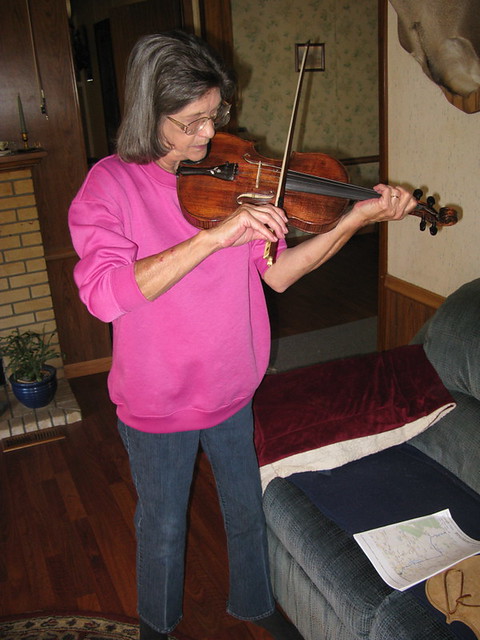
Audrey told me in our conversation that she wasn't the greatest player: "I can play well enough to clear a room in a minute." She took a few strokes on the red fiddle and said, "Told you I could clear a room:"

IMG_2823

We spent a couple hours talking about music, the Bible, life in the mountains, and instruments. It was a pleasure to meet Audrey (and Bob) and be able to acquire one of her fiddles -- she doesn't build much any more, so the one I bought will likely be one of less than a hundred by the time Audrey is promoted to heaven.

Inching my way back down the mountain, stopped to marvel at this beautiful setting -- a cross-shaped farmhouse sitting down in a valley. When you are in the mountains, there's not a sound except the wind and the occasional crow. The silence is startling at first:

IMG_2827

IMG_2828

On the way back to Lansing, saw this barn and quilt design. It's part of the "Quilt Trails of Western North Carolina" project, an effort to reproduce traditional Appalachian quilt designs on the sides of barns and buildings throughout Western North Carolina:

IMG_2832

IMG_2835

Left with the dawn, returned in the dark -- following the harvest moon from the mountains back to Matthews:

IMG_2848

Thursday, October 21, 2010

Proverbs 22:7

Proverbs 22:7 says,

Just as the rich rule the poor,
so the borrower is servant to the lender.

Whole Food

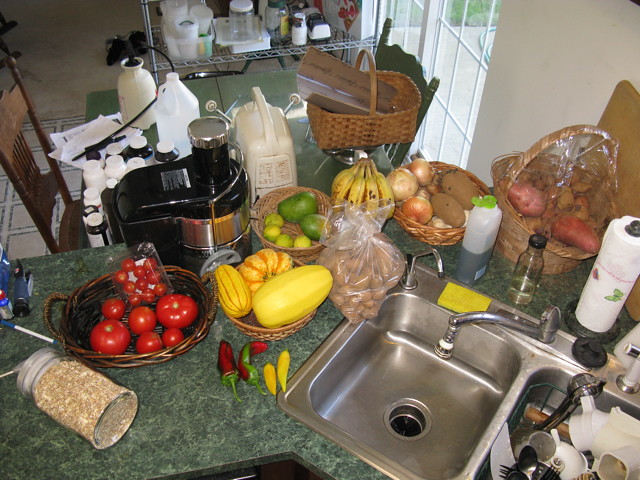
As I was preparing to make some (seven grain, from wheatmontana.com) oatmeal this morning (containing raisins, hemp powder, ground up chia/flax/walnuts, maca powder, blackstrap molasses, maple syrup, and almond milk), the array of whole foods sitting on my counter struck me. The oatmeal in a jar, tomatoes (some mine, some bought), peppers (mine), three kinds of winter squash, four varieties of potatoes, garlic, mangos, bananas, and lemons.

IMG_2780

What struck me was the "wholeness" of all these foods -- picked or purchased in their natural states, waiting to be eaten. My only regret is that I didn't grow all of them -- even lemons and mangos could be grown in an indoor greenhouse.

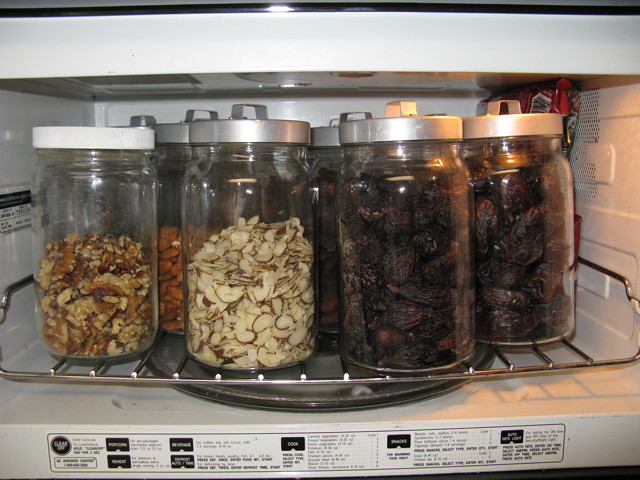
Yes, there are some processed foods in the house, but mostly not. There are dried fruits, nuts, pastas, and noodles stored in the microwave . . .

IMG_2781

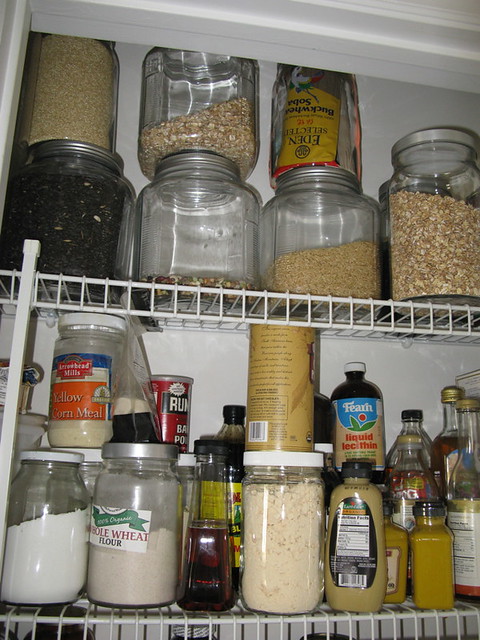
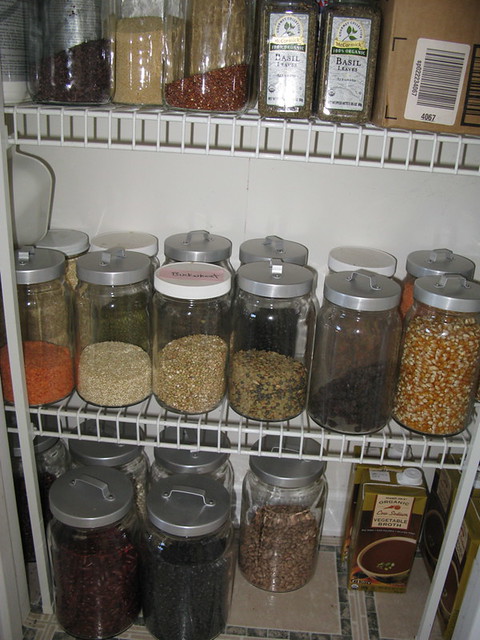
and more jars of bulk beans, grains, rice, lentils, oatmeal, and flours stored in the pantry . . .

IMG_2782

IMG_2783

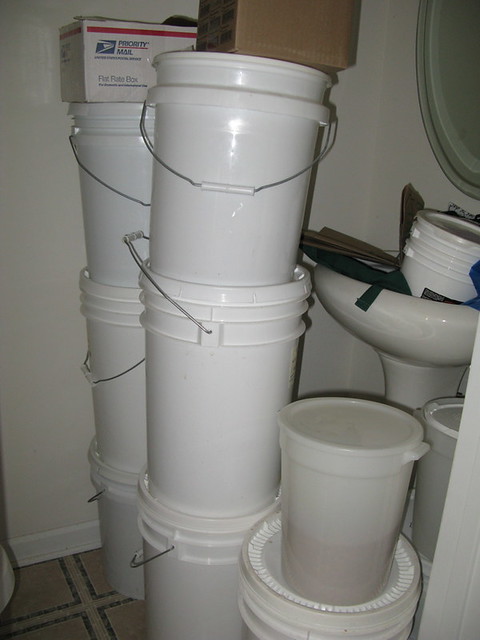
and buckets of wheatberries, brown rice, black rice, chia seed, flax seed, maca powder, and dried beans stored in the guest bathroom:

IMG_2784

Please don't misunderstand the motivation behind these pictures ("Hey -- look at all my food!"). It's just to reinforce the idea that plant foods are grown whole, are available whole, and can be (should be) eaten as whole as possible. It reinforces the oft-quoted idea that once you leave the produce and dried/bulk sections of the grocery store, you leave the "life" zone and move into the "dead" zone where things have been processed for one purpose: to sit on grocery store shelves for extended periods of time.

Sunday, October 17, 2010

Don't Like Being Followed

Last week I visited three different online retailers: the Wolverine boot company, Zappos shoe store, and BackCountry outdoor products. Within a couple of days of visiting these three sites I began seeing ads for the very products I had been shopping for at each retailer popping up when I visited other online sites (CNN, USAToday, etc.). In other words, I was being followed around the web by these three retailers, presenting me with ads for the products I had looked at on their sites. I know targeted advertising is not new on the web, but I have never seen it like this -- ads for the exact products I had looked at on a retailer's site -- three different stores in the same week. It was as if somebody flipped a switch.

So I went to my Safari preferences and did three name searches in the Cookies directory ("zappos," "wolverine," and "backcountry") and deleted the 30+ cookies set for these three sites. We'll see if that throws them off the trail. Not sure I like being followed and hounded so persistently.

Canon Pixma MX870 Printer

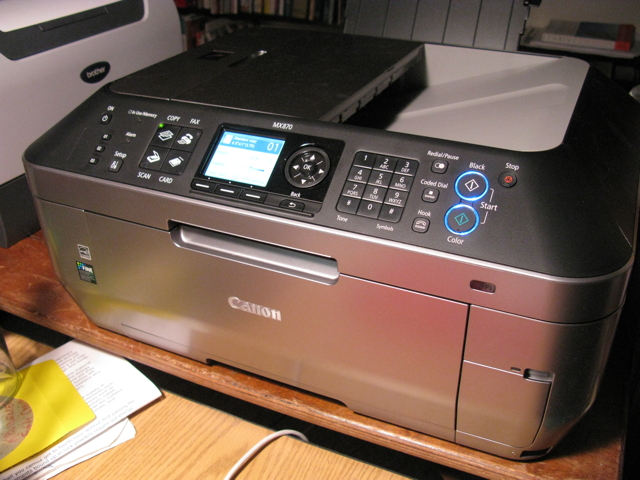
For the last 4-5 years I used a Hewlett-Packerd OfficeJet G85 AIO (all-in-one) printer that served me well (print, fax, scan, copy). But when HP stopped updating the drivers for higher versions of OSX it would no longer scan. I finally replaced it this weekend with a Canon Pixma MX870 all-in-one (below). I looked at a number of printers with three requirements in mind: multi-function (AIO), duplex printing (printing on both sides of a piece of paper), and wireless printing. I don't have a wireless set-up at present but probably will in the future so wanted that in a printer. Wireless in printers is getting more common, but duplex printing in less expensive models is still relatively rare.

I almost bought a higher-end Brother which got great reviews except for its print quality -- its extra benefit being that it will scan, copy, and print up to 11 x 17 size. SInce I rarely have need for that I decided to stick with 8.5 x 11 since they are considerably less expensive. Although I have to say that the Brother laser printer I bought last year (also duplex and wireless) has been FLAWLESS (HL-5280DW). You can see it just to the left in the picture below.

I've only delved into a fraction of what this new Canon will do, but quickly grew to appreciate the duplex copy feature: In addition to printing on both sides of a single sheet, it will COPY on both sides -- meaning put two separate photocopies on the front and back of a single piece of paper (or several other arrangements, e.g., up to four reduced-size copies on the same side of one piece of paper, etc.). Duplex copying is a huge paper saver -- cuts paper use in half.

It also prints photos very nicely on glossy paper -- quality good enough that I would frame a pic from this printer. (That's me -- I'm sure others might be more picky, but the quality seems good to me.) I printed this pic of Ellen and Arianna on a sheet of glossy photo paper and it came out great: (pic by Jennifer with a bit of color adjustment by me)

White dresses color corrected

This was $139 at Costco -- also available at Amazon for $149. Of course, this is the razor/razor blade model: they practically give you the printer in order to sell you overpriced ink cartridges down the road (pack of five color cartridges for this printer is $55 at Costco). The printer gets 4.5 stars from 240 reviewers at Amazon. So far, I like it a lot.

IMG_2774

How We Change

I grew up as an Episcopalian, then made a conscious commitment to Christ in college and became theologically conservative. I remember thinking how liberal my Episcopal upbringing was (and I still think it was), looking askance at "liberal" activities like the annual blessing of the animals at the Cathedral of St. John the Divine in New York City. Blessing animals? Animals in church? "Typical Episcopalians," I thought.

But now I think differently. I still think the Episcopal Church -- except for conservative corners and congregations here and there -- is sadly liberal theologically, even more so than it was when I was growing up as an Episcopalian. But I no longer look judgmentally at the annual blessing of the animals. Since Colossians 1:16 says that all things were created for Jesus Christ, that has to include the animals. They certainly deserve God's blessing as sentient beings as much as humans do, we animals made in God's image. The blessing of the animals is a good example, to me, of a right exercise of the dominion God gave man over them -- caring and providing for them according to their needs.

That change in my perspective was slow in coming, but I'm glad it did. I wonder what I will look back on 20-30 years (d.v.) from now and realize my thinking has changed from what it was in 2010? (I love the honesty and humility of one of conservative evangelicalism's best-known writers and commentators who said, in his sunset years, after decades of writing, preaching, and teaching about evangelicalism's watershed doctrines, "I know far less about prophecy than I used to." If you don't understand that statement, don't worry. It's a "you had to be there" thing.)

Here is a video of this year's recent (October 3) blessing of the animals at the Cathedral of St. John the Divine:

Wednesday, October 13, 2010

How Great Writers Work and Think

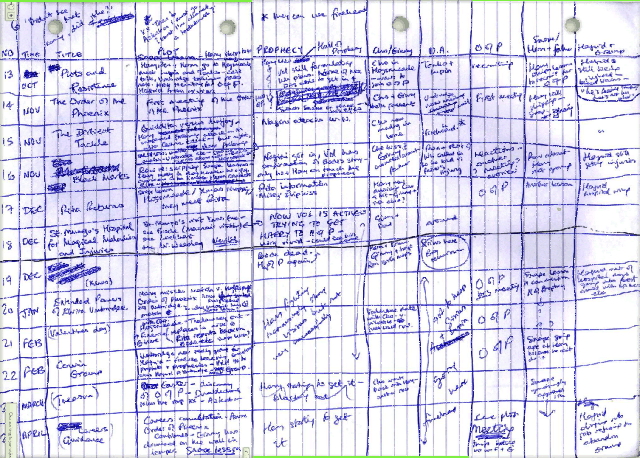
Regardless of what one thinks of the content of J. K. Rowling's Harry Potter series, I would certainly call her a "great writer"—if only for the scope of her vision and imagination and her ability to tell stories that have captivated a significant portion of the world's population. As one who stumbles around words and ideas for a living, I was fascinated by the document below -- part of Rowling's "vision" for the Harry Potter and the Order of the Phoenix book.

This was received from one of Rowling's editors and posted on Alan Jacobs' "Text Patterns" blog at the website of The New Atlantis: A Journal of Technology & Society (Image posted by me without permission.) Thanks to Jacobs -- and to Daniel for the recent link to the journal's web site and associated blogs. The chart is hard to read, of course, but you get the idea of the process Rowling went through in casting a vision for H.P. and friends:

jkrowlingpage